

- about usKAUFMAN – “Or cramming in sex, or car chases, or guns. Or characters learning profound life lessons. Or characters growing or characters changing or characters learning to like each other or characters overcoming obstacles to succeed in the end. Y’know ? Movie shit.”
Kaufman is sweating like crazy now. Valerie is quiet for a moment – from “Adaptation”.We are all about CINEMA. That movie shit.
NOTHING is sacred.
NOBODY is spared.
Because we talk about films, dammit.
Not your sex life.Films, fests, unsung, indies, undiscovered – all that and some fun. If you have dope on anything related to cinema or you would like to share something, do write to us at moifightclub@gmail.com. - Subscribe to Blog via EmailEnter your email address to subscribe to this blog and receive notifications of new posts by email.Email Address:SubscribeJoin 2,288 other subscribers
- Recent Posts
- Revisiting Mammo
- Rishi, Irrfan, I want to scream at the heavens, and bring you back.
- The Well-intentioned, Naïve, and Dangerous Smugness of Thappad.
- Ctrl Alt Cinema
- Anand Patwardhan’s ‘Reason (Vivek)’ – The Discovery of New India
- 2018 – Non Film Music + Dinchak Playlist + Useless Gyaan
- Rewind 2018 – Best Bollywood Songs Of The Year + Playlist
- Screenwriting Masterclass with Mayank Tewari
- Ritesh Batra’s Photograph To Premiere At Sundance
- First Look: Danis Tanovic’s Tigers
- SWA organises Gender Sensitisation Workshop by Paromita Vohra
- Netflix Announces Eight New Original Films And One New Original Series From India
- Danis Tanovic’s Tigers Premiering on Zee5
- Musings from MAMI Day 4 & Day 5: Roma, Climax, Touch Me Not, and Woman at War
- Selection: NFDC Film Bazaar Co-Production Market
- Recent Comments
rahul ramchandani on The Well-intentioned, Naïve, a…
Nadi on The Well-intentioned, Naïve, a…drsapna on The Well-intentioned, Naïve, a…
Ryker on 2018 – Non Film Music +…
Duke on 2018 – Non Film Music +…
- CategoriesCategories Select Category 10 Questions 100 Years of Indian Cinema Aao guess karein Ad world Adaptation animation Awards Behind The Scenes Bengali Bet You Didn’t Know Bolly Jokes bollywood books Box Office Breaking News Call For Entries cast & crew cast news cinema Clips conspiracy theory Contests CQ – Cinema Quotient Crowdfunding Director’s Note Documentary etc Event Everything you always wanted to know about Excerpt FAF (Fund A Film) film Film Festival film review first look Gods of Cinema gossipmongers Guest Post Hollywood In Defense Indie Interview Just A Page Kannada Korean life Life Itself LOL Lyrics Making Malayalam Marathi Movie Recco movie reviews Mumbai Film Festival music Music Recco Music review Must Watch News News Channels Non-film On location Open Letter OTT Photo Gallery pics plagiarism Podcast podcasts Poster Posters POTD Press release Preview Punjabi Q & A QOTD Quiz Regional reviews rewind RIP Screenwriting Scripts shit short film Short story Simbly South songs & videos SOTD Special Spoiler Stills Story / Plot / Synopsis Sunday Shorts Technique television Telugu theater Thoughts Tollywood Trailer tribute Tv Recco TwitteReview video VOTD Workshop World Cinema writing WTF Xclusive Year end special YouTube
- Our FB pagehttps://www.facebook.com/v2.3/plugins/page.php?app_id=249643311490&channel=https%3A%2F%2Fstaticxx.facebook.com%2Fx%2Fconnect%2Fxd_arbiter%2F%3Fversion%3D46%23cb%3Dfb5b8f85bc2279b8d%26domain%3Dmoifightclub.com%26is_canvas%3Dfalse%26origin%3Dhttps%253A%252F%252Fmoifightclub.com%252Ff4542259ed0945cea%26relation%3Dparent.parent&container_width=200&height=432&hide_cover=false&hide_cta=false&href=https%3A%2F%2Fwww.facebook.com%2FMoiFightClub&locale=en_US&sdk=joey&show_facepile=true&small_header=false&tabs=false&width=200
- what we are reading – EightandHalf
- An error has occurred; the feed is probably down. Try again later.
- Tagsaamir khan Abhishek Bachchan Aishwarya Rai Akshay Kumar Amitabh Bachchan Anupama Chopra anurag kashyap A R Rahman Call For Entries Cannes CNN IBN Deepika Padukone Dibakar Banerjee Documentary film film review first look Gulzar Hrithik Roshan Imran Khan Imtiaz Ali Indiafm Irrfan Khan karan Johar Kareena Kapoor Katrina Kaif Khalid Mohamed Love Aaj Kal MAMI Mayank Shekhar Minty Tejpal Mumbai Film festival Mumbai Mirror music Naseeruddin Shah Nawazuddin Siddiqui NDTV NFDC pic pics plagiarism plot poster Priyanka Chopra promo PVR Directors RAre Rajat Kapoor Rajeev Masand Ram Gopal Varma Ramu Ranbir kapoor rediff review Sanjay Dutt script Shahid Kapoor Shah Rukh Khan song story synopsis Taran Adarsh teaser Theatrical trailer TIFF Toronto International film festival trailer UTV Varun Grover video Vidhu Vinod Chopra Vidya Balan Vikramaditya Motwane Vishal Bhardwaj VOTD Yashraj Films
- Top Clicks
- Blogroll
- /film
- Aamir Khan
- Amitabh Bachchan
- Baradwaj Rangan
- Chavanni Chap (In Hindi)
- CineEuropa
- Criterion Corner
- DearCinema
- Guardian Film
- Indiewire
- IonCinema
- Long Live Cinema
- Mad About Moviez
- Mubi’s Notebook
- My PDF Scripts
- Mystery man on film
- Naachgaana
- ReviewGang
- Screenwriter John August
- Scriptlarva
- sex in a sub (for screenwriting)
- The Script Lab
- TwitchFilm
- Wordplayer (for screenwriting)
- May 2026MTWTFSS 12345678910111213141516171819202122232425262728293031« Nov
- DISCLAIMERThe views, opinions, reviews, articles, or positions, expressed by the authors and those providing comments are theirs alone, and do not necessarily reflect the views, opinions, positions or strategies of ANY OF THE EMPLOYERS, FRIENDS, RELATIVES, PR agencies, Production houses, Media group and such third parties associated with the authors. The latter make no representations as to accuracy, completeness, currentness, suitability, or validity of any information on this site and will not be liable for any errors, omissions, or delays in this information or any losses, injuries, or damages arising from its display or use. In short, if you have an issue with us or any post we’ve written, write to us at moifightclub@gmail.com
Revisiting Mammo
Posted: November 6, 2020 by moifightclub in cinema, film
Tags: Farida Jalal, Khalid Mohamed, Mammo, Nadi Palshikar, Partition, shyam benegal, Surekha Sikri
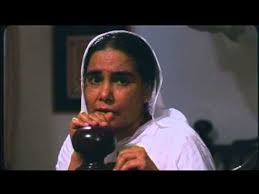
The actor Surekha Sikri is not keeping very well these days. I wish her good health and send her love. What better way to do that, than revisit a film in which she has acted? I will not discuss in detail the nuances of her performance, or the character she plays. For actually, the protagonist of the film is very ably played by that other lovely actor – Farida Jalal.
I love both performances equally. But here, I remember the film for Surekha Sikri.

Mammo is an important film. It released in 1994. Often, when we happen to know that a story is based on an event or is about a person from the author’s own life, we label it as autobiographical. In doing so, we deny ourselves the other aspects of the work. Mammo is a story of a woman, Mammo is a story of two nations. For reasons that we can see all around us, Mammo is prophetic.
Just a year before the film is in theatres, blasts have shaken Mumbai forever. Polarisation, Communalism, is beginning, ably aided by neoliberalism which allows the poorest of poor to be deprived of any safety net whatsoever. The 90s’ globalisation has somehow led to decreasing work participation of women. No work, means no income, means no voice. Women’s struggles too are no longer demanding their rights. Mahmooda Begum too is not shouting and fighting for her rights.
Mahmooda is asking, “May I be allowed to stay?”
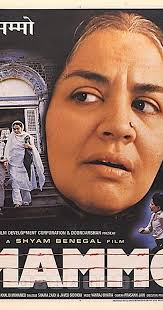
Right at the beginning, unanswered letters. The film sets very clearly the equation between Mammo and Faiyazi. Mammo is the sister who kept writing the letters even after receiving no repy.
Faiyazi did not reply even after receiving letters repeatedly.
Either a power equation, or that Mammo needs something desperately. We see this from the point of view of Riyaz, now grown-up, obviously a writer. “Mammo Naani wrote so many letters to you, Faiyazi Ma”. The letters stayed unacknowledged. Naani makes excuses – something about ‘small flats’ – for the letters asked whether Mammo could come live with them. The letters told of the ill-treatment meted out to her after the death of her husband.
“Tumhaare naana leke gaye mujhe“, Mammo naani tells her grandson. The circumstances in which she left for Pakistan – not forced, not fleeing, but for love.
In a shared traumatic experience that the two peoples, if we may call ourselves that on either side of the border, went through, but out of a personal choice. Not like the ‘abducted women’ (of The Abducted Persons Bill 1949). The women who were abducted and then ‘restored’. Nicely divided between the two nations.
Properly following all the terms of the treaty between the two nations that did not agree to anything else except the ‘rightful’ ‘restoration’ to the ‘community’ of its women.
However, “saare apnon se chhudha liya tha mujhe” – he separated me from all my people. This is rendered with a smile that has fondness for the love, but also states the reason for her wanting to come back to India – her people, her apne, are here. ‘Wanting to come BACK” – BACK is the operative word here. This brings to mind the fundamental premise of citizenship. At the time of partition, it was thought that the premise would emphasise choice. That citizenship would be inclusive. “Open to those who made a choice to stay here, but also open to those who left, but want to come back.” Even then, there were some concerns felt by the then interim government. Only about this part – those who left by choice but now wanted to come back.
These concerns, seem to have been resurrected around CAA. But back to the story of this sweet old lady who speaks not of laws , but of intangibles like the earth(the mud) of her land, the smell of this earth..
“Meri umar ke ho jaaoge toh samjhoge ke apne watan ki mitti ki khushboo kya hoti hai“
Does mitti allude to the mitti put on the body during burial, I wonder, and therefore will be understood at an advanced age with the impending reality of death.
Every little action of hers as she negotiates, speaks of her need to integrate. That this means adopting the mannerisms of the majority community is one of the failures of a country that had started out wanting to be secular.
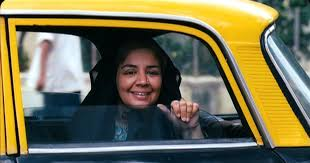
e.g. Scene in the police station –
First meeting with Inspector Apte (played by Sandeep Kulkarni)
Three greetings
Mammo (smiling): Namaste officer saaheb.
Then, to Riyaz: aadab karo sahib ko.
To the police officer, almost as if trying to ingratiate herself, to ‘fit in’, The Hindu greeting: Namaste
To Riyaz, inculcating the Muslim ways, grace: Aadaab
And what does the boy say? Neither Aadaab, nor Namaste, this boy studying in a Christian school, having a Hindu for a best friend, watching American movies on the sly, Riyaz: Hello.
Three Stories
1.
Mammo recounts how she went to the border “doosre mohajiron ke saath“, with the other fleeing refugees.
“Kya zamaana tha. Qayamat thi Qayamat.” It was as if the day of reckoning, says Mammo
It was indeed a day of reckoning. There would be questions asked. Only nobody could hear them.
“Khoon, lootmaar, lashein“. She is talking to a little boy, her grandson, so Mammo does not describe the rapes.
But yes, she speaks of a woman. A woman who was walking in the same group. She carried her two children. Perhaps a disease, perhaps the malnutrition and stress of walking, one of the infants died. Quick decisions had to be made in such a situation. While passing a river, the others in the group tell her to throw the dead body into the water. Tired, displaced and disoriented, “uss aurat ne zinda bachche ko paani mein fenk diya, aur laash apne seene se lagaakar chalti rahi” – the woman threw the infant who was alive into the water, and kept walking, having clutched the dead body to her chest.
2.
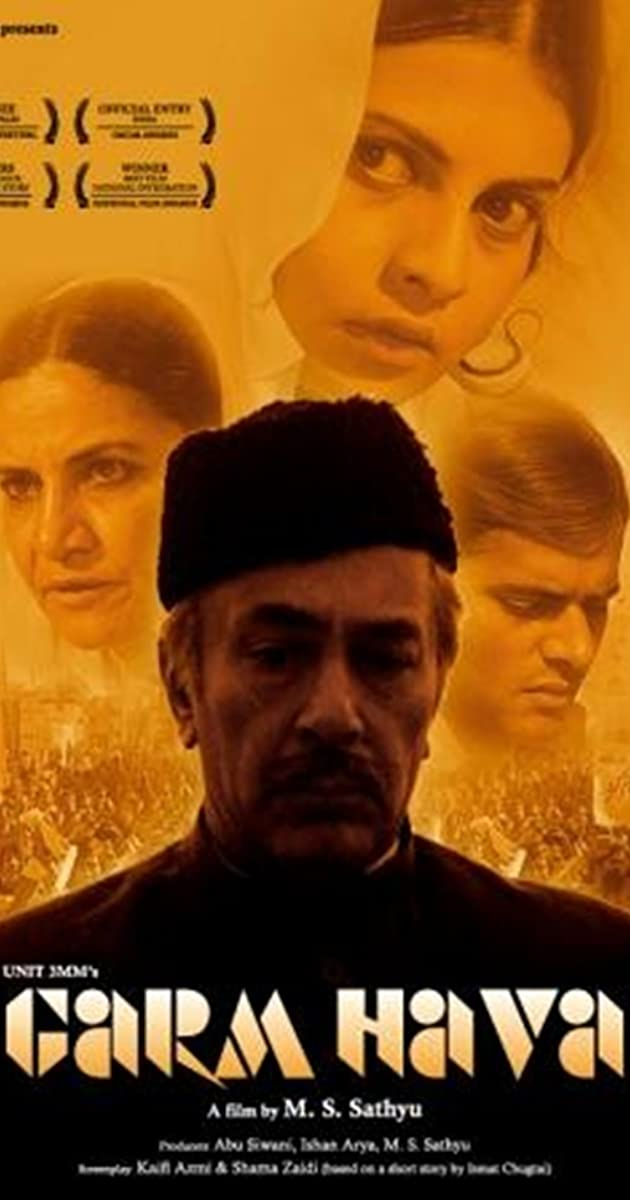
The story of Garam Hawa. The director quotes a film inside this one. It is introduced with humour –
Riyaz: Partition ke baare mein hai film. Teen ticktein laaon?
Mammo naani: Fizzi (referring to Faiyazi) chalegi?
Riyaz (tongue in cheek): Mammo naani, serious film hai.
We smile, only to discover that it is indeed, a serious film. The scene chosen is of the old lady character being brought back to her old house for one last time. “Amma jaan, dekho hum aa gaye purani haveli mein.” And here, in the audience, Mammo exclaims “Ya Rab. Lagta hai meri hi kahaani banayi hai.“
We look at the crying faces of Mammo naani and Faiyazi Ma.
The two sisters cry for the character, but we know that their tears are also for their own lost childhood haveli in Panipat. Mammo has been displaced, yes, and history has sent her far away from the watan, but Faiyazi has lost a home too.
3.
The story that Rizzu wrote: A woman is taunted by her relatives for being a baanjh – a barren woman. He narrates the story to his best friend. We know he is describing Mammo Naani’s life.
“What is the point of this story?”
Riyaz’s answer is casual, almost trite, “The point is that everyone returns to their roots.”
The child’s pleading, even angry eyes tell us that it is anything but, or that and much much more – it is about an entire life, about a moment in the life of two nations, and above all, it is about Mammo Naani!
The Birthday party incident – Mammo cannot keep out of others’ business. She keeps doing what she thinks is good for the person. This time, she plans a surprise birthday party for Riyaz. Unlike the feigned surprise expressed at such parties, Riyaz is truly surprised. For he’s never invited friends home before.
“Woh hum jaise nahin“, he says, showing us how even the boy who fits into quite comfortably in the public space of the school, knows that the private space of the minority community life is different. Different not only from others, but different from that which is considered mainstream. Mammo is more relaxed about it, “but they had such great food.” “They will laugh as soon as they go out from here”, screams Riyaz. Because he is hurt, because it is her fault, because she meant well, and above all, because there is so much love and pain, there is a big fight.
Riyaz comes out with accusations, criticisms, and worse, states that his grandmother Faiyazi has ‘allowed’ her to stay here, “tum mehmaan ho iss ghar ki“, and Mammo has taken advantage of this kindness and has gone too far.
Mammo is, as if, kicked out of her marital home all over again.
“Jinka apna ghar nahin hota, unka koi ghar nahin hota.“
When the doors of her home were closed on her, back in Pakistan, Mammo had spent some days in a dargah. Faiyazi remembers this. The search begins. The refuge of the homeless. Homeless and distressed. Across religions – at one dargah, we are shown a Hindu woman – a woman characterized as a Hindu. Riyaz supports Faiyazi’s frail body in the search. He is trying to make amends for his words. What her husband could not do. What that other family in that other country did not do, this boy wants to do – Bring Mammo back home.
The song picturized over beautiful old heritage Dargahs in Mumbai – beautiful old heritage dargahs whose steps lead down to residential areas clearly marked Muslim, clearly marked poor, clearly SEPARATE. Even in the country she wants to belong to, there is no real equality. Here too, she, as a member of the minority community, will be inferior. Yes, the members of the community Mammo belongs to, do have formal citizenship, but can they ever hope for a substantive citizenship based on equality? Mammo’s struggle, even if it becomes successful, cannot even hope for this substantive citizenship. There are too many inequalities.
Na Jaane kaunsi matti watan ki matti thi
Nazar mein dhool, jigar mein liye gubaar chale
And
Yeh kaisi sarhade uljhi hui hai pairon me
Hum apne ghar ki taraf uthkar baar baar chale
Restored home safely, Mammo is looking at the fish in the home aquarium, “yeh machchliyaan kitni mehfooz hain apne ghar mein. Inhe yahaan se koi nahi nikaal sakta.” When she had first arrived, she had suggested that they be left loose into the sea. To allow them to live a free life. Now the same aquarium represents safety and permanence. Even the desire of personal liberty is secondary to the need for CITIZENSHIP. For good. Forever.
When the tout/agent at the Police Station (played by Kishore Kadam) asks “ab aur kitne din rehne waali hain?“, Mammo’s answer is “bas jitney din reh gaye hain“
Why is it so? Is it because of her age? That wherever she has lived, she wants to come home to die? And why the citizenship of a particular place? Her husband’s country? No. Her Father’s land? No. But
“Yeh MERA watan hai“
She has now gone to a restaurant to meet the policeman. This meeting has been arranged by a tout. This scene, one can correlate to what is called ‘A different relationship being sought with law’. The marginalised in search for what calls ‘Citizenship outside the domain of the state’.
The two-faced nature of this process of the illegal means to get a legal document is reflected in the face of our protagonist.Confidence when she says this. “Yeh MERA watan hai“.
Vulnerability when she removes a ring off her finger and hands it over as baksheesh/bribe/commission.
Police escort-
Riyaz is not at home. “Meranawaaza aake baat karega.” Bravado. A male relative who will come and speak for her. But we know that Riyaz is just a teenager, a child.
A teenage orphan is the only male in the family. There is a heartbreaking kind of fragility in this household – bringing to mind what Roy calls in her lecture, “A certain kind of family”, and ths person the family is trying to shelter. Roy calls it “the awkward person the family is trying to absorb.”
But the family is helpless in face of the face being now applied by the sovereign state and its police arm, “seedhi tarah chalti hai ke hathkadi daalun?“, “yahan Hindustan mein chipke baithi thi?“, asks the police woman. All pleas unheard, the police drag her out of the house. No luggage. No change of clothes. She is not allowed even her burqa. Her sister Faiyazi runs behind the vehicle holding that burqa in her hand. Where is Riyaz? At the tailor’s for a trial fitting. Mammo has bought material and has a master tailor stitching him a Sherwani. “Badhne ki gunjaayish rakhna“, he has been told. A growing child’s dress.
Now this child behaves a lot like a grown-up. He goes looking for Inspector Apte who they have bribed, only to find that the cop has been transferred. So, finding out that the train is leaving from Bombay Central Railway station and “sabhi pakistaani ghuspaithiyonko wahaan leke gaye hain“.
Our dangerous ghuspaithi, the portly, cuddly Mammo has been dragged to the platform.
Now, this woman cop character, the two minutes the film spares for presenting the cops in a good light (the male cop has said “yeh kaisi duty hai yaar“). Veteran feminist Veena Das has describe the behavior of the “social workers and policemen” at the time of ‘restoring of abducted women’. “State was exercising powers of domination and persuasion.” The manner is (pretending to be) what Veena Das calls “non-coercive”.
So in our film, the woman cop says in a sympathetic tone “kaay ko itni khitpit karti hain? Tum apne ghar ko jaa rahi“.
But Mammo’s ghar is here. Her struggle has not been for a passport, but for an understanding, an acceptance by her ‘home people’, the permission to be buried near home.
Mammo says her final line “mera ghar toh yahi hai. Kya mujhe do gaz zameen…?“
That is not the last we see of her! In an epilogue, the adult Riyaz who is now an author answers the doorbell, and there she is – an initially unrecognizable, but remembered and loved Mammo naani. In a comic twist she has declared herself dead, and has stolen across the border – for good. Now nobody will try to look for her. Shyam Benegal the director and Khalid Mohammed the writer give us this joyous end.
In reality, did Mammo cross the border back? In 2019, I read a novel by Khalid Mohammed. The Aladia Sisters is a story of sisterhood that tells the history of a subcontinent. But coming back to Mammo – Is Allahrakhi actually Mammo naani?
In this book –
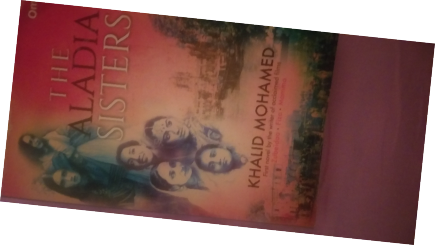
On page 267, “Allahrakhi Aapa had never let me know what was going on”, Faiyazi ma continued, “then that awful awful news came. When her body was sent for post-mortem, the reporters said there was an evidence of violence and traces of a sedative… I can’t say more child… whether it was…” “I don’t want to hear more.” Says Mammo naani’s grand-nephew. We do not know what really happened to Mammo, on which side of the border. The fate of the women displaced, kicked across the border lost, abducted has always been uncertain – always covered in silence.
But we have left the film at the last scene on the railway platform. Mammo is being almost pushed into the train by the police.
The sight of Mammo, that line she says, “mera ghar toh yahi hai. Kya mujhe do gaz zameen …?” is heartbreaking. As if heartbroken himself, for yes, sometimes characters break a writer’s heart, the writer gives her a solace. A man puts a small child-passenger in her care. This too, is a hurt child, like the one she is leaving behind. “Abhi abhi operation hua hai. Thoda kamjor hai“, says the child’s guardian as he gives her the responsibility of taking this child safely across the border. The woman who came over because she was labelled a baanjh. Mammo naani, without whom, little Rizzu is going to be lost. Riyaz reaches the platform, finds her seat. The train starts leaving the station. They are torn apart by borders. She is not allowed time to even wear her burqa, but she leaves behind her, a boy wearing her gift – his first sherwani. An obviously Muslim boy. Her citizenship is the issue in the film, but for a moment we forget it, at the sight of this boy running after a train.
Can he hope to receive substantive citizenship, of equality?
nadi (Manasee Palshikar) an MBBS doctor, had worked with women from lower socio-economic strata for several years, when she went to The Pune University to do an MA in Gender, Culture and Development,from the Krantijyoti Savitribai Phule Women’s Studies Centre(KSPWSC). She has completed the course in Screenplay writing at the Film and Television Institute of India (FTII), Pune, and then, briefly taught there. nadi’s novel, Sutak was received warmly, and appreciated for its treatment of Gender and Caste.
Share this:
Loading…
Rishi, Irrfan, I want to scream at the heavens, and bring you back.
Posted: May 1, 2020 by fattiemama in bollywood, cinema, etc, life, rewind, RIP, tribute, WTF
Tags: blog, bollywood, Dev Anand, Irrfan Khan, Rajesh Khanna, Rishi Kapoor, Shammi Kapoor, Shashi Kapoor, Sridevi
Two nights in a row I read news of people I loved and admired re-admitted to hospital because their debilitating disease desired so. Two nights in a row I went to sleep asking and avoiding the terrible question, what if…? Two nights in a row I did not know I would wake up to the ‘what if’ coming true. They are stars, after all, they will be fine. And ultimately everyone has to die, they will too, but not now, not like this, I kept telling myself. But they did. I just didn’t know it would feel like this, so personal even words are saying I will give into the moment and stay silent.
Irrfan was my present, Rishi was my past, not everyone has such a glorious history; only those who share it will know. Between them they encompassed the art and commerce of the mostly silly Bollywood which both simply elevated by their sheer presence. Or even a smile. Where do I go look for them now?

The last time I felt this unnervingly devastated wasn’t yesterday, when I heard about Irrfan. The shared pain on my echo chamber of social media was so loud and deep, it somehow put my pain in convalescence. Irrfan was our present, how dare they take him away, everyone was screaming in unison. Even the ones who are generally rational and stoic about these matters. It was too deeply personal for everyone including myself, his leaving us, but in that collective heartbreak I found some solace to tide over the very, very unfair blow life and death had thrown at me, at all of us.
But with Rishi it feels like a family member has gone away and I am sitting and weeping away unable to wrap my head around what the hell is so devastating about this. The last time I felt this unnervingly devastated without understanding why was when Rajesh Khanna left us. I wasn’t even an ardent fan, just really liked him in everything he had done pre-80’s, everything that I keep hanging onto till date. I wrote about it here. I was mourning an entire era and my childhood he took away with him, making the present unrecognisable. I am sitting and mourning that again as Rishi takes away with him whatever was left of it.
But why am I weeping like a family member has passed on, Chintuji would you know? You, who with that chocolate boy innocence and lover-boy impishness never let me stay depressed for long? All I had to do was play one of your songs, mostly with RD and sing along ‘Hoga tumse pyaara kaun’ as though I meant it for you. I didn’t tell anyone but I did. You, whose manic energy uplifted everything and everyone around you in whatever dismal setting of a film you were placed in? It didn’t matter, your settings, coz whenever you were on screen it was like, ‘tere chehre se nazar nahi hathti nazare hum kya dekhe?’ You, who were so criminally under-rated despite coming from the First Family of Bollywood and being its best lover boy onscreen? When he received a Lifetime Achievement Award in 2008 for 25 yrs in the industry, I learnt the last Filmfare he received was in 1974, for his debut Bobby. That is how criminally under-rated he was and I decided to love him a little more from my end even though by then he was a pudgier version of himself, not the perfect lover boy Rishi of my dreams, but still with the same charisma, same charm, same exuberance, same enthusiasm for life.

The most attractive thing about Rishi Kapoor was not his smile, or looks, it was his enthusiasm for life that showed through in every performance. It was infectious, like how. Perhaps, that’s why when depressed all I cared to do was put on one of his songs with Neetu that RD had strung together, and live off that enthusiasm vicariously. Ek main aur ek tu, dono mile is tarah, ke he invariably put life back into my soul that was ready to give up. I still have those songs to go back to but I don’t have you anymore Rishi, and right now I am at a sheer loss what to do about that…
He was the only Bollywood celebrity I followed on Twitter for a long time, not even SRK. Twitter is such an extension of Bollywood PR it is really boring to keep buying those lies even our celebs themselves are not convinced about. But not Rishi, he was real. Fuck, he was real even in that jungle called Twitter and unabashedly so. Taking in all the hate and disdain with the same love he accepted our love. And that infectious enthusiasm for life. ‘I am ready to get back to acting,’ didn’t he say as soon as he was back from that 11-month long stint of treatment abroad? Where do I look for him now?
He was so, so, so good in his second innings. Sometimes, I thought, even better than in his prime. Perhaps, it was about the roles he got and the sincerity with which he performed them. And the accolades kept coming in, finally Filmfare was recognising him too. And he had so much more to give, and I was hungry to take. From the refreshingly honest portrayal of a Bollywood producer in Luck, by chance, to that loud, hammy, vile antagonist of Agneepath, to the cute, vulnerable, authentically middle-class father and husband of Do Dooni Chaar and more, he simply seemed to be this fountainhead of performance that kept giving. Put him in any role and all you had to say at the end of it was, waah, Chintuji, waah! With all heart and smiles. Who will I say that to now?
I feel extremely silly, and adolescent and naïve banging away at my keyboard trying to understand from where is this despair arising. The first time I felt it was with Shammi Kapoor and I have never been able to hear the Rockstar tune he performed without flinching ever since. Next was when Devsaab left us, the man we thought would go on and on living (and making films) even after we stop. He was my first love, I wrote about him here. Then Rajesh Khanna, then Shashi – that other breathtakingly beautiful Kapoor only comparable with his nephew Rishi. And then there was Sri…never mind. She was a piece of all our hearts. Sometimes, I think I will never accept she isn’t around anymore, I don’t, I won’t, I can’t.

Just like their films, and their eras they evaporated, taking with them everything that was special about growing up even in the dead, dank 80’s. And I am left screaming at the heavens at the injustice of it all. It was only films, after all, some would say. They were mere actors, others would say. They were only dream sellers and tricksters of your imagination, many would say. Yes, but then why did they stick so close to reality? Why did they inform life so dearly like it depended on them and their smiles, their styles, their guiles? If they were only dreams, is this how dreams always end? Taking away all those parts of your childhood that you thought would live on despite yourself?
But then, as you find out, they don’t. Those parts go where your beloved heroes and heroines go. And perhaps, it is better that way, they were meant to be together, they will be safe. As for us, who have been left behind, without our pasts and without all those who kept the past breathing long after it was gone, ‘we will always have Paris’. Long live, Irrfan, long live Rishi, and long live all the heroes and heroines taken away from us. I feel more anger than love right now, but as they say, anger is nothing but love that has no place to go so here is hoping all of them are feeling the love wanting to reach them. I have fused my past, my childhood, various parts of my identity and some of my best memories with you and sent them along to keep you safe and remind you that you will be loved always.
And that you will live forever. Wherever you go, we will always have Paris. I will meet you there.
Share this:
Loading…
The Well-intentioned, Naïve, and Dangerous Smugness of Thappad.
Posted: March 3, 2020 by moifightclub in bollywood, cinema, film review, movie reviews, reviews
Tags: Anubhav Sinha, Dr. Manasee Palshikar, film review, Nadi, Taapsee Pannu, Thappad

New-age urban-liberal-feminist Bollywood is where women’s issues go to die.
Domestic Violence has been ‘dealt with’ in a popular Hindi film last weekend. How Thappad depicts it, what solution it suggests, is now part of the popular imagination. Tick. One more issue has been covered. No other film on this topic will be made for a long time. I think this is why the male dominated industry is now ‘allowing’, facilitating this new wave of ‘women oriented’ films – they are confident of the superficiality with which the issues will be ‘dealt with’. After all, this superficiality is made possible only by the mediocrity that they fathered and propagated.
The trailer promises it to be about You. Who ‘me’? Yes, there are common experiences as women, but surely, the writer is aware that even gendered values are determined by class, caste locations?
Writers’ lack of understanding of political and historical reality, the inadequate representations are often defended by the fraternity from any discourse by saying “This is the story we choose to tell.”
But wait a minute, you have made it for public consumption. You are saying it is the story of Indian women. But, it is Amrita’s story.
Amrita who is constructed as an emotional, vulnerable girl, and presented as a physically attractive, fragile body. A commodified domestic woman created by capitalist patriarchy is copied on to her page by a woman script writer.
Thereby, deleting the ‘inspiration’ part of the project.
This characterization, instead of empowering, makes a woman viewer feel inadequate. Not even one slap. See/this pretty girl does not take shit.
Unlike you.
The film does not show how to resist/protect against/survive violence, but shows that certain women do not have to take even a fraction of what is part of your everyday life.
One has learnt not to question the absence of say, a Muslim woman, or a middle-class working mother, but in a film about a slap – about a violation of physical self – surely one could also see a different kind of body, one not so fragile face?
Films in a popular space cannot shirk from the responsibility of varied representation.
If the film ignores difference, THE OTHER CAN NEVER BE REPRESENTED.
One token subplot – the only way the character and the writer can access the other half- enter, the domestic help!
The writer deigns to take a disdainful look at lower socio-economic class household. A working class couple that performs underpaid hard labour, and has complex, shared, survival strategies to feed their children is not granted any intelligence or grace in their marital intimacy by the film. The violence among the poor is shown as meaningless, crude, repetitive, almost comic as opposed to a one-time, almost accidental incident, but one that leaves the heroine’s vulnerable face with a permanently hurt and traumatized expression.
I remember that other domestic help (played by Ms. Hattangady) in Arth (1982. Dir: Mahesh Bhatt). This woman is also a victim of domestic violence. But the situation is problematized by her material struggle for a better future for her daughter – “English medium school”, a life unlike her mother’s. The violence is reversed when the Bai kills her husband – brought about by the unforgivable act of stealing the money that she has been saving for her daughter’s school admission.
In Thappad, in a beautiful conversation with her mother-in-law, Amrita suggests that the older lady start cooking classes. Something to keep the old lady engaged I suppose – closest the film comes to talk of a job from our protagonist.
Amrita, who, with a full time domestic help,and the whole day left to her after the cuteness of the morning routine, did only one hour work in her neighbor/friend’s house in the entire day!
Materialist feminism though, is not touched upon by the new urban feminist film projects because materialism feminism questions, along with patriarchy, also capitalism.
Which, is not allowed, I suppose, because the urban liberal feminist projects, are themselves, a part of capitalist production and distribution structures.
But if not livelihood struggle, surely sexuality can be allowed? Thappad does not attempt to question any of the sexuality issues that surround intimate partner violence.
In Thappad, not for a moment do we see sexual desire between Amrita and Vikram. The love she feels for him, does she miss him at night? Adult, sexual love – not the rather corny list of domestic tasks – feeding parathas at the car, handing him his wallet etc – that poor Amu has done for the family out of love! Love, as in love between two young people who are in an intimate co-habitation? Is there a moment, in all those days of separation when she is conflicted between anger and desire, or both simultaneously?
For example, what would the writer of Thappad say if I put it to her, that there is an interplay of fear, hurt and desire in marriages fraught with violence?
No, not because ‘those women have no choice’ in contrast to the repeatedly asserted ‘choice’ that the urban upper class artists seem to have, or because the women are masochistic(this is another malady that’s going around – this quick pseudo-psychological labelling of complex social phenomenon), which they are not.
Oh come on, don’t tell me you have never hummed Billie Holidays’ “My man don’t love me” ha ha!
Jokes apart, if those women are masochist, so are all of us, every time we are engaged in consensual lovemaking in our beautiful relationships of equality, for heterosexual intercourse is violent in the very nature of the act.
What if there is, really a connection between sexual desire and violence in not only the minds, but also real lives of some victims/resistors/surviors of intimate partner violence.
“Violence as an experience, seemed to me to represent a point of intersection, of trajectories of hurt, touch, love, fear, hunger, and shame.” (On Bodily Love and Hurt, V. Geetha – A Question of Silence: The Sexual Economies of Modern India (ed. Janaki Nair, Mary E John)
Not just desire, but the hurt body itself does not disturb the pretty visuals. There are of course, to be no visibly broken/bruised parts – the main thing is the just-one-slap of course – but not even a slightly swollen face, or in the praised performance, perhaps just the feeling of her tooth with her own tongue while speaking in the post-slap scenes, or reaching out to close her ear – as people who have just been slapped tend to do, due to injury to the tympanic membrane – the ear drum. Nothing. Just the hurt expression, and the almost infantile insistence, repeated ad nauseum beginning at the trailers – Can’t hit. No fractures (not literally, darlings) to the impeccable appearance.
The violence almost not-there, and so the punishment.
“If she charges you with domestic violence, you will be in jail”
Not to worry, Vikram, the script will not put you in jail. Jail is to be filled with certain communities, certain classes- even the possibility of you, well-heeled you going there has never been dreamt by the script.
After the Love Actually kind of showing how everyone ended up, there is an emotional poem.
Supposed to be empowering, it in fact valorizes paternal protectionism. Amrita begins her single life, in a new flat, but under the nurturance and support of her father, and will now fulfill the dreams that father once had for her.
I remember the last scene of again, Arth (1982. Dir: Mahesh Bhatt) where Pooja (Ms. Azmi) lifts up her adopted daughter – a girl who, like Pooja, is an orphan. Pooja is beginning a new life, now taking responsibility for the life and future of another person.
Amrita, on the other hand, makes a point.
Nadi (Dr. Manasee Palshikar) has done her M.A (Gender, Culture and Development) from the Pune university, and has completed the course in Screenplay Writing from FTII, Pune.
Share this:
Loading…
Ctrl Alt Cinema
Posted: May 9, 2019 by Amit Sharma in Workshop
Tags: ctrl alt cinema, residential course, Workshop

Ctrl Alt Cinema is now in its 3rd Year!
Announcing our annual course 2019 dates: June 16th – July 3rd.
Ours is an intensive, 18 days residential course on the art of cinema.
Register Here: https://www.ctrlaltcinema.com/apply
Our People: https://www.ctrlaltcinema.com/love-cinema
Our Course: https://www.ctrlaltcinema.com/learn-cinema-1
Our Gallery: https://www.ctrlaltcinema.com/live-cinema
We are a group of people with a wealth of experience in film-making and teaching cinema.
Students are drawn to the course because of the prospect of direct engagement with, and guidance from, the best in the industry.
Teachers come to us because they believe in our open and inclusive philosophy:
WE HAVE A PURPOSE, NOT A SYLLABUS.
Share this:
Loading…
Anand Patwardhan’s ‘Reason (Vivek)’ – The Discovery of New India
Posted: April 23, 2019 by Amit Sharma in Documentary, Movie Recco, movie reviews, OTT, video, YouTube
Tags: Anand Patwardhan, Documentary, episodic, Fatema Kagalwala, Reason, YouTube
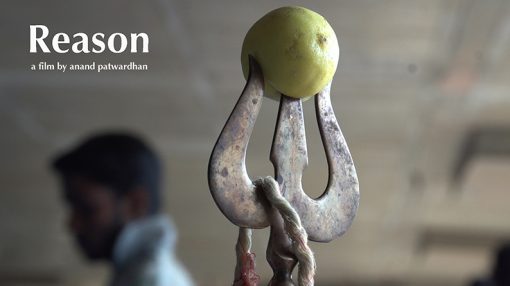
It is brutal watch. Yeah, that’s the actual statutory warning, but we are all old enough for it, right? The reason I am writing about Reason is because there is every reason for all of us to be talking about the exact same things as the film.
First off, this is not a review – cute things like ‘reviews’ don’t matter to films like these. Anyways, it isn’t the film that needs a review, the country does – the truths it challenges are so stark. It lays bare in no uncertain terms the clear divide between (religious) rhyme and (democratic) reason, literally and figuratively.
If this film is shown in the beginning of every movie instead of the national anthem, people may not start feeling more patriotic about the country, but at least they will be sensibly patriotic. Since, it has 16 chapters of almost 15 min each and you may not have so much time so here is an abridged summary and highlights, with some personal commentary to keep the truth going. You tell someone else about it, and it will spread. Hopefully, we will come back from the brink of the abyss staring at us, in time. (Also, watch the entire thing first.)
Chapter 1 – Dabholkar & Chapter 2 – Pansare
https://www.youtube.com/watch?v=IX2ZeG3szQ4
https://www.youtube.com/watch?v=osrfRS364yg
The film doesn’t waste time coming to the point, it starts from the centre, from the Dabholkar, Pansare & Kalburgi murders and the entire film is interspersed through with their thoughts. Who killed them is a moot point here (also coz everyone knows), more important is the question – Why were they killed? They were killed because they empowered the marginalised classes through reason and reason, as we all know, does not rhyme. Reason sings no one’s tunes.
Chapter 3 – Shivaji
From the killing of rationalists, the film moves to investigating the killing of rationality. It throws spotlight on the fractured as well as manufactured history surrounding the Maratha King Shivaji, while taking pains to separate fact from fiction. It also throws a spotlight on the hard-core elements manufacturing this history for their own benefit, and widely poisoning the Hindu-Muslim and ‘nationalist’ narrative.
Chapter 4 – Virasat
After setting the stage, the film quickly comes back to talking of the legacy left behind by Dabholkar and Pansare; it takes us right inside the minds and hearts of people these men have touched, classes that are the bedrock of our society, traditional as well as modern. It instils hope. The film also touches upon how society is being influenced artificially and pressured directly by those who demand a Hindu rashtra.
Chapter 5 – Sanatan
Chapter five takes us directly into the womb of the problem, Sanatan Sanstha located in Goa. Founded by Jayant Balaji Athavle, the organisation diligently works towards achieving its dream of converting India into a Hindu rashtra, through planned terror activities. There is strong opposition to their activities and existence right in the village of Ramnath, where it is located, from the local Goan people. The local people want to live peacefully in their diversity without the Sanatan Sanstha.
(Caution: The parts with the kids in Sanatan Sanstha fooatge is very creepy. Watch at your own risk.)
Chapter 6 – Ganpati
The film then goes to uncover the politics behind religious festivals and how they are used for spreading propaganda by political parties and religious groups. Dabholkar and Pansare both had questioned the environmental impact of the unchecked Ganpati celebrations in Maharashtra. The film keeps questioning their murders. Maybe, we must too.
(Watch out for – The part where the lawyer chap defending the accused in Malegaon blasts telling Patwardhan, on camera, ‘Why did the police allow Anand Patwardhan to protest? Why didn’t they break his bones? When that happens, one feels angry.’ Waah re, democracy.)
Chapter 7 – Shital
After zooming out, the film zooms into the microcosm of the Sanatan Sanstha, and its efforts to divide India not only along communal lines, but also casteist lines. Dabholkar, Pansare, Kalburgi’s words keep stitching the narrative forward and the section ends with a beautiful tribute song to the three men.
(Must think about – The Haji Ali protests section where Hindu and Muslim suddenly become one against a single enemy, the woman. Think, think hard. Or laugh.)
Chapter 8 – Dadri
This is the toughest to watch and that’s why the most necessary. The Dadri beef lynching episode is like a wound on the nation’s conscience we can neither heal from, nor move on from. But the quiet assurance in Akhlaq’s young, very old son is a balm. If he can still see a better India and work for it, so can we.
(Keep calm – At the end when the father of one of the lynchers justifies the lynching and when challenged that the Govt investigation found no beef ends with a ringing and profound, ‘How can we believe?’ Breathe. Think of how Dadri was and still wants to live in peace and brotherhood.)
Chapter 9 – Cow Dalit
The spotlight travels to Una, where gau-rakshak terrorism reached new lows in July 2016. The section begins with the actual footage of dalits being flogged and it’s cruel (and if that doesn’t make you angry, just stop. And retire, from life). But the film captures very nicely the heartening spirit of the Una ‘uprising’. The marginalised must rise up and claim their space. Also Modiji has ensured Muslims join the Dalits in Gujarat, and there is hope. There is always hope.
(Check out New India – The last five minutes – the four injured dalits in the hospital saying none of them is scared anymore, it is a fight for justice. And Akhlaq’s son.)
Chapter 10 – RSS
And now we come to the point of the whole matter, RSS. The organisation that killed Gandhi. The film takes us through its diligent training camps and takes head-on some of its rather brainwashed foot soldiers. It is a whether-to-laugh-or-cry moment. (But there is a one-liner gem there to deal with a bhakt, just ask him, ‘Who killed Gandhi?‘ and watch him disintegrate.)
(Must note – The Ram Mandir station maybe an imposition but there is still a Mahim a few stations down and a ‘Masjid’, on the other line. Let it come, in Bombay rush hour Hindutva won’t be able to survive beyond Andheri.)
Chapter 11 – Rohith
Rohith Vemula is not the wound of the nation, he is the test of the nation. And we cannot afford to fail that test, period. Through Vemula’s story, the film lets the dalits tell their story and follows it wherever it goes. About time, our nation began to do that as well.
(Must do – The last bit is an oral rendition of Rohith’s last letter. If you haven’t read it please listen to it.)
Chapter 12 – JNU A
Enter Kanhaiyya Kumar and although I cannot fault his politics or intentions, must say, his emergence and rise has always seemed more manufactured than organic. But the truths about our society and especially politics that his emergence lays bare are naked. The fake narrative of nationalism is fooling no one, especially not the youth.
(Check out New India part II – The two ex ABVP leaders who left the organisation on grounds of its regressive stands and political ideologies. They were thinking for themselves.)
Chapter 13 – JNU B
Extended interviews with Kanhaiyya Kumar follow with a deeper look into the Hindutva menace. And perhaps significantly, it ends with a conversion ceremony of dalits into Buddhism, rejecting Hinduism saying, ‘I believe, I am being reborn.’ If Hindusim will reject them, what are they supposed to do?
Chapter 14 – Mush A
This is when the ocean comes to the doorstep. The question, ‘Who Killed Gandhi‘ has now become, ‘Who Killed Karkare?’ and it hurts even more. Or rather it should. The film exposes the loopholes in ATS chief Hemant Karkare’s death and links to the Malegaon blast investigations and asks questions that have never been more urgent. Let’s ask them before Sadhvi Pragya becomes our Prime Sadhvi of 100% Pure Brahmin Hindu Ram Rajya. (It sounds like the name of some ghee, doesn’t it?)
Chapter 15 – Mush B
The plot thickens and thickens and one just keeps swallowing the hopelessness of the same 80’s masala story of aam junta as well as upright officers victimised and exploited by powerful political forces. It’s like a potboiler seriously, a good old Sunny Deol film. We are back to the 80’s in 2019, some development for sure. Pansare had publicly claimed Karkare’s death was an organised conspiracy and the conspirators would be unmasked soon. He was killed too. The connections are ridiculously clear in this ‘we-all-know-who-dunnit-but-won’t-say-it’ not-thrilling-anymore, thriller that is more of a joke, our nation.
Chapter 16 – The end
The series comes to an end with a deeper look into the amazing amalgamation the establishment and hindu terror outfits have become and keeps raising that one seminal question to chest-thumping nationalists, ‘Who Killed Gandhi?’ The answer to that may lie in the question, ‘Do we want a Hindu Rashtra or do we want Freedom?’
There, there is a discovery of a New India in front of us. It is upto us what we do with it, take it or leave it. Its upto us, really. After all, it stands to reason.
Share this:
Loading…
2018 – Non Film Music + Dinchak Playlist + Useless Gyaan
Posted: December 26, 2018 by moifightclub in cinema, music, Music Recco, Year end special
Tags: Alif, Anday wala burger, anurag shanker, Asrar, bhangra, bhangra before everything, Cokestudio11, cold mess, Harpreet, has ho gaya, insaan, Jimmy khan, Katyo chukho, lakha khan, Lucky, lyari underground, Main or sheeda, Malayan band, marijuana, marz, may or sheeda, mess, naalayak band, nagma, Namit Das, no pain no bhangra, pavan gaikwad, Prateek kuhad, raftaar, sahil samuel, sahotas, sanam puri, sanam revolution, shamoon ismail, shivani bhagwan, shubha mudgal, tu jivain marijuana, vishnu, wah jo kalaam, ya kareem, yellow diary, young desi, zarasa, zero to infinity
 You can find old year round ups non filmi here – 2011, 2012, 2013, 2014, 2015, 2016, 2017
- If you don’t want to waste time reading (you know because blogging is dead), scroll down straight to the playlist.
- The post is filled with links and you must check out few of them especially where I am talking about Namit Das.
- The selection here is what I came across as new albums came out and/or when someone shared something with me. The flip side of being permanently absent from social media is – losing out on good music reccos. Please feel free to add your reccos because I know that there is a lot that I have missed…or not.
- If you want to have a quick look at the list here it is:
| Song | Album | Singers | |
| 1 | Hass ho gaya | Sahotas | Sahotas |
| 2 | Jigar mein dard | Namit das | Namit das + Anurag shankar |
| 3 | Jaantha tha | Sanam puri | Sanam revolution |
| 4 | Bawra | Sahil Samuel | Naalayak band |
| 5 | Marz | Yellow diary | Yellow diary |
| 6 | Tum ur main he to hain | Zaraasa | Pavan Gaikwad |
| 7 | Gaddi | Zero to infinity | Raftaar |
| 8 | May or Sheeda | Young desi | Young desi |
| 9 | Insaan | Alif | Alif |
| 10 | Sapne jeete hain | Harpreet unplugged | Harpreet |
| 11 | Baalkada | Coke Studio 11 | Nagma, Lucky and Jimmy Khan |
| 12 | rap hai sara | Lyari U.G. + Young Desi | |
| 13 | wah jo kalaam | Asrar, Shamu bai and Vishnu | |
| 14 | Ya kareem | Bridge of dreams | Shubha mudgal |
| 15 | The awakening | Live at the Amarrass desert festival | Lakha khan |
| 16 | Mess | Cold/Mess | Prateek kuhad |
| 17 | Marijuana | Shamoon ismail | Shamoon ismail |
Hass ho gaya – Sahotas, remember them? Band of brothers who shot to prominence in early 1990s when ATN TV channel used to play music. Though I couldn’t find their ‘original’ music video of this song, I am happy that I could find them and put them on the list. Simple, non autotuned, a bit off note here and there and insanely enjoyable.
Jigar mein dard – Anurag Shanker and Namit Das – I have written about the duo earlier this year as well. You have got to hear them live to know what dimension they bring to our dying ‘non-filmi-non shouting – non bollywoodlike’ genre. Namit’s alaap refuse to leave me to this day. As far as this song goes, well, hear it and feel yourself. With people like Namit on the scene, I do feel there would be a part resurgence of Ghazal or Ghazal like joy.
Jaanta tha – Sanam Puri and the gang – I know this came in 2015 but I heard it thanks to the album that came out this year. Beautiful, 90s-sque pop album grammar of this album, wonderful experience.
Baawra – Nalayak band – I know Sahil Samuel came out with this song in 2017 but I didn’t come across it then, largely because they released a set of songs this year as an album and that is when I got a hold of it. It turned out to be a good outing and even though I found the lyrics to be a bit of a let down, I loved the sound of the band.
Marz – Yellow diary – Thanks to someone pointing me to Sony youtube channel earlier this year, I came across this explosive song. Though the follow up of this song with the album titled izaafa, wasn’t as good as the song Marz, I would love to see what Yellow diary does next. Do see and hear the the song. You won’t regret it. Word.
Tum aur main he to hain – Pavan Gaikwad – A simple album albeit too short had this lovely little gem..Do check it out.
Gaddi – Raftaar and Deep Kalsi – The space is filled with below average clowns who think wearing oversized clothes and having misogynistic lyrics in a song is enough. Raftaar is miles ahead of all of them in terms of talent and thank God for it. I loved his album Zero to infinity and especially this song did me in. It has a lovely little tribute to Babu mann as well.
May or Sheeda – Young Desi – This is a Punjabi rap that I discovered through a dearest bud in Pakistan. This is rap song. This is savage funny. Young desi is so kewl! Fun fact – somewhere in the song, this appears on screen ‘1947 was more injurious thank alcohol or smoking’. *Mic drop*
Alif – The find of this year for me. Though I cannot get over Katyo Chukho, I suggest you check his channel right away and Yes, do check out the song(?) in the playlist.
Sapne Jeete hain – Harpreet – Though it was still not as beautifully sung as he is capable of, this quiet little song of Harpreet penned by Dr. Shiv Bahadur Singh Bhadauria has remained a favourite of mine since last 3 years and thankfully now I can speak about it, openly.
CokeStudio 11 – Though we shared a playlist of our picks of this season earlier this year here, Baalkada, Rap hai sara and Waah jo kalaam refuse to leave my playlist and that is why I have included these 3 lovely songs in the playlist as well. Whatever happened to CokeStudio India at MTV (Remember Imran khan was the brand ambassador for it? Hahaha!)
Ya kareem – from Bridge of dreams – is a hauntingly beautiful song and though largely Shubha mudgal and the team has been embarassing in the whole album, this beauty stands out. It is not available on Youtube and if you want to listen to a portion of it, may be try iTunes or click on this link.
Live at Amarrass desert festival – Yet another beautiful album that I discovered thanks to Amazon music.My favorite remains the awakening with which the album opens. It is done by Lakha khan sahab and boy does it pierce your heart..!
Mess – Prateek Kuhad – Of course the visuals play a large part in yours truly loving this song, (even the taxi seat cover adds to the mood). My heart is a mess…Prateek Kuhad you beauty and a big up to everyone associated with the song, in any capacity and what a way to end the year. Fantastic time to be alive and of course to die. May be check the live version at amazon music...it doesnt have that glass crackling vibrancy to it but a good enough vibe to accompany you as you cry slowly, alone.
Marijuana – Shamoon Ismail – Explore his channel, I implore you. His work is plain brilliance and buzz has it, we will see him in the next season of a popular music movement. This song here is one for long drives and for closed rooms where you find yourself, sitting with half finished chai, a cigarette you threw too soon, a longread article you promised you will read tonight…Listen on, you crazy people and till then remember – Toon jivain marijuana, Koe davay na drama, Chaliay baar tenu mein naal le ke jawan, Toon jivain marijuana, Tethoon jalay zamana, Jaande loki nae jeray tera fasana
A Few Quick points and useless gyaan:
- 2018 was an excellent film year and like someone said, it took 3-4 years of hard work and writing for everyone to find better stories and excellent execution of 2018. Let us hope our music scene (film and non film) is also where film making was 3-4 years ago.
- Yes, I love Ali Sethi and it kills me to see Bollywood lifting songs that Ali has been re-imagining and Ayushman-khurana-ising it. Guess which one has more ‘views’? One example here and for the second one, search ‘kithay naina na jodi’.
- If you are one of those who don’t get jealous of other people, do not devoid yourself from what Shivani and Chhaya are doing. Check out their channel here. Check from oldest to current songs, there is just so much happiness and effort here with a bit of character progression as well. I hope Bollywood doesn’t corrupt them. I cannot run in the gym without the music they handpick for their dances. You have no idea how good their videos are. Real hardcore workout, real happiness, not sitting on sorry ass and making opinions about things on social media in a bid to get a job with those you ‘hate’. Hit it! brrrruah!
- I hope non film songs (and not those by mainstream record companies) get a suitable outlet to come out with more songs. I am sad by what has happened in this area so far.
Quick useless gyaan:
- If you are looking at non apple, sweat proof, bluetooth earphones, do not consider BOSE soundsport – they have a huge issue of battery drain. Don’t consider the skull candy SB wireless 2, they are not sweatproof.
- If you are looking for good headphones and can do without noise cancellation, please pick V-Moda Crossfade Bluetooth 1. Do not pick the ‘latest’ model (BT CrossFade 2), their sound is not as good as the earlier model, though BT Crossfade 2 are more portable. If you are a confirmist and don’t want to invest in ‘weird’ design of V-Moda, then please stay happy with your QC35 Bose and some such. Fun fact – it is not about ‘design’ stupid!
- If you are looking at buying a good sound dock, consider looking at these before making a choice – Devialet Gold Phantom and Marshall Woburn.
Here is the Non film playlist and below that, the dinchak playlist. Happy new year!
Dinchak kyunki – badhaaiyan tere ot nu tere pot nu tere baaaap bantey got nu!
Finis~
Share this:
Loading…
Rewind 2018 – Best Bollywood Songs Of The Year + Playlist
Posted: December 19, 2018 by moifightclub in cinema, music, Year end special
Tags: 2018 film songs recap, A M Turaz, abhay jodhpurkar, Ajay-Atul, Amit Trivedi, Ammy virk, Arijit Singh, army virk, Deepak Thakur, Diljit Dosanjh, Faiz, Gulzar, Himesh Reshammiya, Irshad Kamil, Jaideep Sahni, Jonita Gandhi, jubin nautiyal, Kausar Munir, Kumaar, manoj muntashir, mithoon, music, niladri kumar, Papon, Prateek kuhad, Rochak kohli, sachet parampara, Sandesh Shandilya, Sanjay Leela Bhansali, Sayeed Quadri, shahid mallaya, Shankar Ehsaan Loy, Shankar Mahadevan, Shellee, shiv kumar batalwi, Shraddha mishra, shubha mudgal, sidhhatha-garima, Sunidhi Chauhan, Sunny Bawra-Inder Bawra, Swanand Kirkire, Vineet Singh, Vishal Bhardwaj

In the last 5 years, 2018 was easily the best when it came to film music. It was also the year in which the drip irrigation music release technique (‘release one song when you want and let them wait for the album’) was at its peak(?). At the time this post is getting baked, albums for the music release of Simmba (to be released on 28 December) and Zero (To be released in 3 days) are yet to hit the music listeners. So Boo you makers! for being so insecure and under-confident about music. I hope some sense penetrates your nonsensical surround sound system you cover yourself with, filled with Yes-men and favour seekers (who can also make a playlist for you, I hear). I have so much to say but I guess we should just get down to the business end now.
We have picked one song per album, a rule I wish I could go around but am thankful it exists. Do suggest your favourites which aren’t on the list for I am sure I have missed some gems. Also, there is a separate Dinchak playlist that would be tagged along with the non film music post.
If you are in no mood to read, just scroll down to play the embedded playlist.
If you just want to have a quick look at the list, here you go.
| No. | Song | Singer | Lyrics | Music |
| 1 | Adhura Main | Deepak Thakur | Vineet Kumar Singh | Vineet Kumar Singh |
| 2 | Aaj Se teri | Arijit Singh | Kausar Munir | Amit Trivedi |
| 3 | Binte Dil | Arijit Singh | A M Turaz | Sanjay Leela Bhansali |
| 4 | Lae Dooba | Sunidhi Chauhan | Manoj Muntashir | Rochak Kohli |
| 5 | Lo Safar Shuru | Jubin Nautiyal | Sayeed Quadri | Mithoon |
| 6 | Raat Yun dil mein | Shraddha Mishra | Faiz Ahmed Faiz | Sandesh Shandilya |
| Papon | ||||
| 7 | Ae Watan | Arijit Singh | Gulzar | Shankar ehsaan loy |
| 8 | ishq di baajiyan | Diljit Dosanjh | Gulzar | Shankar ehsaan loy |
| 9 | Saansein | Prateek Kuhad | Prateek Kuhad | Prateek Kuhad |
| 10 | Tera fitoor | Arijit Singh | Kumaar | Himesh Reshammiya |
| 11 | Ahista Ashita | Jonita Gandhi | Irshad Kamil | Niladri Kumar |
| Arijit Singh | ||||
| 12 | Daryaa | Ammy Virk | Shellee | Amit Trivedi |
| Shahid Mallaya | ||||
| 13 | Har Har Gange | Arijit Singh | Siddharth-Garima | Sachet-Parampara |
| 14 | Naina Banjare | Arijit Singh | Gulzar | Vishal Bhardwaj |
| 15 | Wo Ladki | Arijit Singh | Jaideep Sahni | Amit Trivedi |
| 16 | Mere naam tu | Abhay Jodhpurkar | Irshad Kamil | Ajay Atul |
Adhura main – Being a fan of Deepak’s Harmonium accompanied voice since humnee ke chhori ke, it was easy to love this earthy song with emotions spilling all over the senses. Vineet, the composer and lyricist, has summarised the entire struggle in this fabulous song. You cannot listen to this song on repeat, that is how devastating it is.
Aaj se teri – Endearing, melodious, rich, simple and filled with love.
Binte dil – Though I am madly in love with Nainowaale ne and Ghoomar, I just couldn’t get beyond this mad mad song that has everything and a little more. Of course the song is composed and written very well, but for me, the refreshing whiff is Arijit‘s effortless singing. Those who tell you they loved Ranveer Singh because of ‘khali bali’, are actually thinking of this song. Yep.
Lae dooba – A song filled with Shiv Kumar Batalvi‘s mainu tera shabaab lae baitha vibe, Lae dooba gave us Sunidhi Chauhan the way we are almost forgetting she can touch your soul.
Lo safar shuru ho gaya – When Mithoon composes happy romantic songs without the Aashiqui-sque familiarity, such pleasant songs emerge and boy what a delight they are!
Raat yun dil mein – The first duet I liked this year. I dislike romantic songs but when Faiz is done right, it feels…Jaise beemar ko…bewajah qaraar aaye..The song cures you of ailments you didn’t know you had.
Ae watan – A song in 2018 that celebrates ‘desh prem‘ subtly, a rare event these days. Pahuchu mein jahan bhi meri buniyaad rahe tu. Though towards the end of the song, I felt like I am listening to the end notes of ‘Noor e khuda’, it only made me love the song more.
Ishq di baajiyan – Though I didn’t enjoy the backup vocalists going a bit too hard on ‘door na jaa’, S.E.L.’s masterstroke of using Shankar Mahadevan‘s voice smartly did me in. Though it is the least ‘repeated’ song this year amongst all here, how can you not fall for Diljit Dosanjh’s charming voice?
Saansein – Main apne hee mann ka hausla hu, Hai soya jahan par mein jaga hu..Main peeli seher ka nasha hu…Main madhosh tha..ab main yahan hu. Prateek Kuhad, you beauty!
Tera fitoor – There is always time for an old fashioned, non autotuned fantastically composed romantic song from Himesh Reshamaiyya isn’t it? I don’t care how the video is, I love this song a bit too much for my own good I guess. Arijit Singh, are you human?
Ahista Ahista – Laila Majnu, the album delighted me in ways that A.R. Rahman’s albums used to. There is too much to thank this album for and I choose Ahista Ahista for the playlist. Irshad Kamil has penned easily the best film song of the year here. Doori ye kam hee na ho, main neendo mein bhi chal raha. Truly a song worth dying for.
Daryaa – Mannmarziyaan was no Dev D, still it came dangerously close and broke everything that came its way this year. Both versions of this song are super good, still I feel the rush much more thanks to Ammy Virk‘s version. I could write pages about the way Ammy makes me soar. Most importantly, don’t forget – Shellee.
Har har gange – The most intense yet calm song of the year. Off late, We seem to hardly get spirituality right in Hindi films, let alone music. This is a beautiful exception. Tera karm hee hai jo sang tere hee jaaye. No intellectualising, just a simple message, delivered simply. Arijit singh, I love you.
Naina Banjare – I was so tempted to put the title song here, still this mad song took the better of me. Giri re giri babua, beech bajaare. Did you notice Arijit call Naina as Nahena…?
Wo ladki – The overarching tune, magnificent composition, irresistible singing and what atmosphere! Amit Trivedi, the dominator of the year!
Mere Naam tu – The only reason I have not put any song of Dhadak is because even the title song (which wasn’t as embarrassing as other ‘dubbed’ songs) had the stamp of Ajay Atul and you could predict the pace and sound of the song. This one however, has a ‘Jaadu teri nazar’ madness and that with the confident Abhay Jodhpurkar on the microphone is just too difficult to put away. Lastly and most importantly, Irshad Kamil. Yep.
P.S. – I feel compelled to mention a few more things here.
Genres that Hindi film music touched this year which I absolutely loved:
Friendship – Tera yaar hu main from Sonu ke Titu ki Sweety – If that horrible qawwali detour wouldn’t have existed in the song, this would have made it on the list above. Still, a good addition to the genre.
Sensuous done right – Mujhe Chaand pe le chalo – A.R. Rahman misses a lot and hits far too few off late. Nikita Gandhi and Irshad Kamil ensured this one is a hit and boy does it stay hit! (With No-hea Kakkar-isation of every song these days, it is difficult to extract real emotions from the barrage of autotune-ness these days…and this is why, Mujhe chaand pe le chalo feels even more delicious).
Inquilaab – Azaad Kar – The film had other gems as well but somehow it was reassuring to hear a wistful Swanand Kirkire pay tribute to times we are living in.
Me, as I am – Tere jaisa tu hai – I love the song but for occasional shrillness. What I absolutely love are the opening lines. Hear them again if you cannot recall them.
Kashmir – Katyo Chukho – It would have been unfair to ‘trap’ this song in the main list above. This is the best song I have heard this year and this is a song for which I would always be thankful to the makers of Laila Majnu. They gave me Alif. A song to live by and die to. It is what Channa vey wanted to and what Agar tum saath ho was.
Infinite Joy (a.k.a. Bitiya rani) – I cried all 3 times that I saw the song on screen. Yep, this one. What brilliant work by Sunny Bawra-Inder Bawra, Kumaar and of course Shubha Mudgal.
2018 – One of the most difficult years to make this playlist and am glad it was so.
Share this:
Loading…
Screenwriting Masterclass with Mayank Tewari
Posted: December 15, 2018 by Amit Sharma in cinema, Screenwriting, Workshop
Tags: Mayank Tewari, Newton, Screenwriting, Screenwriting Workshop, Sulemani Keeda
Screenplays form the starting point for most great dramatic films. This shapes the perspective from which all other filmmaking flows. All of the tender romance, terrifying action and memorable lines begin at the screenwriter’s desk. Would you want to learn the craft from a master craftsman?
Screenwriting structure:
Find out whether you should go with a simple ‘beginning-middle-end’? Or would you rather play with multiple timelines?
Synopsis and log-lines:
Learn how to write a logline apt for conveying the entire essence of your screenplay, and how long or short it should be.
Plot:
Essence of your story relies on how well you organize its core events. Learn how to manage the heart of your screenplay from someone who has been there and done that.
Formula:
Find out how do the experts write their way to successful stories. Learn the mantra of the industry professionals.
Plot Twists:
Could your plot-twist be abstract, and still be plausible? Learn how to make your plot twist impactful.
Dialogue Writing:
Know the dos and don’ts of writing dialogues, and how to make them believable and compelling.
Storyboard:
How to begin about converting your words into visual language? Learn the basics for crisp storyboarding.
About the Facilitator
A former reporter, Mumbai based columnist and screenwriter, Mayank Tewari rose to fame with Newton, his second feature as a screenwriter following his debut Ragini MMS in 2011. If you are an avid film buff, you may have read that Newton is India’s official entry to the Oscars in 2018.
Venue
The District – Bungalow No. 96
Jankidevi School Rd, Versova, Andheri West, Mumbai, Maharashtra 400061, India
Booking
on Insider.in
Share this:
Ritesh Batra’s Photograph To Premiere At Sundance
Posted: December 1, 2018 by Amit Sharma in cinema, film, Film Festival
Tags: Nawazuddin Siddiqi, Sanya Malhotra, sundance, world premiere

The Sundance Institute has announced the showcase of new independent feature films selected across all categories for the 2019 Sundance Film Festival, to be held in Park City, Salt Lake City and at Sundance Mountain Resort, from January 24 to February 3, 2019.
Ritesh Batra’s Photograph has been selected for the festival and is having its World Premiere there. Ritesh has directed and written the screenplay of the film, and the producers are Neil Kopp, Vincent Savino and Anish Savjani.
Synopsis
Two lives intersect in Mumbai and go along together. A struggling street photographer, pressured to marry by his grandmother, convinces a shy stranger to pose as his fiancée. The pair develops a connection that transforms them in ways that they could not expect.
The film stars Nawazuddin Siddiqi and Sanya Malhotra.
Share this:
First Look: Danis Tanovic’s Tigers
Posted: November 13, 2018 by Amit Sharma in cinema, film, first look, Trailer
Tags: Danis Tanovic, digital premiere, Emraan Hashmi, first look, trailer, zee5
Danis Tanovic’s controversial film Tigers is getting a worldwide digital release on ZEE5 on 21st of this month.
The trailer of the film was dropped some time back. Do take a look.
Directed By: Danis Tanovic
Produced By: Prashita Chaudhary, Kshitij Chaudhary, Guneet Monga, Anurag Kashyap, Andy Paterson, Cat Villers, Cedomir Kolar and Marc Baschet
Cast: Emraan Hashmi, Geetanjali, Adil Hussain & Danny Huston
Sceenplay: Danis Tanovic & Andy Paterson
Music: JAM8
DOP: Erol Zubcevic
Editor: Prerna Saigal
Sound Designer: Anthony B Jayaruban
Production designer: Rachna Rastogi & K.K. Muralidharan
Costume Designer: Niharika Bhasin khan
Casting: Seher Latif, CSA
Line Producer: Vishal Bajaj
Share this:
SWA organises Gender Sensitisation Workshop by Paromita Vohra
Posted: November 11, 2018 by Amit Sharma in film, Screenwriting, Workshop
Tags: gender sensitisation, Paromita Vohra, Screenwriting
“NARI TERI YAHI KAHANI TO #BoreMatKarYaar”
A SCREENWRITING WORKSHOP BY PAROMITA VOHRA ON GENDER SENSITISATION

Feminist ideas always show up as an exception in Hindi films – or most films for that matter. It is crisis, revolution, morality play around themes of rape, dowry, divorce, revenge, victimhood or heroism. But does a feminist film always come waving a flag? Or can we imagine it more interestingly, more true to life, more humorous and sexy with more smarts and heart? Could Hindi Masala RomCom be more feminist than a film about feminism? Are songs and beauty, love and interiority full of feminist possibility (Yes!)? Can we write different female characters without writing different male characters? Can we re-conceptualise ‘issue-based films’? In other words – can we imagine an effortless feminism? One that is part of every kind of film?
Paromita Vohra is a writer & a filmmaker whose work mixes fiction and non-fiction to explore themes of urban life, popular culture, love, desire and gender. Her films as writer include the internationally released feature Khamosh Pani/Silent Waters and as well as the play Ishqiya Dharavi Ishtyle. She is the founder and Creative Director of Agents of Ishq (a unique digital project about sex & love in India)
Date: November 15th, 2018 (Thursday) Time: 05:30 PM
Venue: SWA Office, 201 – 204, Richa Building, Plot No. B – 29, Off New Link Road, Opposite Citi Mall, Andheri (West) Mumbai
NOTE: Only for SWA members. To attend, RSVP by sending an email to contact@swaindia.org Limited seats (for first 45 members only – On ‘First Come, First Served’ basis).
Details: www.swaindia.org/blog/gender-sensitisation-workshop-by-paromita-vohra/
Share this:
Netflix Announces Eight New Original Films And One New Original Series From India
Posted: November 11, 2018 by Amit Sharma in cinema, film, Press release
Tags: Netflix, originals
Netflix concluded its inaugural content event in Asia, “See What’s Next: Asia” with a celebration of the company’s rapidly growing diverse content slate in India. Netflix CEO Reed Hastings and chief content officer Ted Sarandos joined performers and creators from India to announce eight original films and a new original series. The showcase also included updates on four Indian original series that were previously announced.
“We celebrate India today with an incredible line-up of original films and series that are right now filming across India. This line-up cuts across genres from horror to fantasy and in locations from Leh to Mumbai. The breadth of stories with its local settings and complex characters is incredible and we can’t wait for people to discover and fall in love with them,” said Ted Sarandos, Chief Content Officer for Netflix.
The “Celebrating India” session at the event saw media and influencers from 11 countries across Asia witness the breadth and depth of Netflix Indian Originals. The updates on four original series include:
- A trailer for Rajma Chawal, a humorous family drama set in Chandni Chowk, New Delhi, which is set to release globally on Netflix on November 30, 2018. Rishi Kapoor, Amyra Dastur, Aparshakti Khurana and Anirudh Tanwar act in the film, directed by Leena Yadav.
https://www.youtube.com/embed/0wkCfRiC4F0?version=3&rel=1&showsearch=0&showinfo=1&iv_load_policy=1&fs=1&hl=en&autohide=2&wmode=transparent - A teaser trailer for Selection Day, a series based on Aravind Adiga’s book of the same name. Produced by Anil Kapoor Film Company and Seven Stories Ltd, Selection Day is a coming-of-age drama about two brothers who are raised by their strict, obsessive father to be star cricket players.
- The cast of upcoming series Baahubali: Before the Beginning, with Mrunal Thakur as Sivagami, Rahul Bose as Skandadasa, Atul Kulkarni, Vaquar Shaikh, Jameel Khan, Siddharth Arora and Anup Soni.
- The cast of Leila, a dystopian fiction series produced by Deepa Mehta, including Huma Qureshi in the title role and Siddharth Suryanarayan.
Netflix rounded off these updates with the announcement of a new original series:
Typewriter is about a haunted house and a haunted book that stir the imagination of a group of young, wannabe ghost hunters, and a dog, determined to capture the ghost that plagues the notorious home in their neighbourhood in Goa. When a new family and their captivating daughter move into the haunted home, the crew finds it difficult to balance the demands of school and chores with the renewed urgency to capture the neighbourhood ghost before it is too late.
Underlining its investment in original films in India, Netflix unveiled eight new original Indian films spanning genres and involving the best of established and new Indian talent:
Chopsticks is about an under-confident but talented girl, sidestepped at every stage of her life, who seeks out an enigmatic con to help recover her stolen car from a goat-loving, crazy Mumbai gangster. In the process, she finds her confidence and place in the sun. Along with Mithila Palkar who won hearts in Netflix series Little Things 02, Abhay Deol and Vijay Raaz will act in the film. Chopsticks is produced by Ashvini Yardi of Vineyard Productions and directed by Sachin Yardi.
Bulbul, produced by Anushka Sharma and Karnesh Sharma’s Clean Slate Films, is a period piece set in a vibrant atmosphere amidst age-old beliefs and superstitions. Satya and his brother’s child bride, Bulbul, were inseparable until he was sent to England for his education. On his return, he finds Bulbul has been abandoned by his brother and now lives a solitary existence as the enigmatic lady-of-the-palace, dedicating herself to the welfare of the people. But their ancestral village is plagued by mysterious deaths and stories of a haunting by a woman who lives in the trees. Satya must find the truth behind the lore and save his village from the evil “chudail with the inverted feet”.
Upstarts is a bromance about three college graduates from small-town India, captivated by the startup mania sweeping the country. As they enter the rollercoaster startup ecosystem of big dreams, big money and bigger sharks, they are faced with a big choice – their dreams, or their friendship. Directed by Udai Singh Pawar, Upstarts is produced by Raja Menon, Janani Ravichandran and Jawahar Sharma of Bandra West Productions. This film is supported by real-life heroes from the startup world in Bengaluru.
Cobalt Blue, based on the best-selling novel of the same name, is the story of a brother and sister who fall in love with the same man, and how a traditional Marathi family is shattered by the ensuing events. This story brings out the pain and the beauty of forbidden love, and is written and directed by Sachin Kundalkar.
15th August, produced by Madhuri Dixit, is set in a Mumbai chawl, and follows the course of a single day as its residents prepare for the flag-hoisting ceremony. This Marathi film is about the struggles of middle-class India and in a soaring climax, it is about how love sets us free.
Music Teacher, directed by Sarthak Dasgupta, is a story about an emotionally troubled music teacher, essayed by Manav Kaul, who gets a chance to come to terms with his bitterness with an estranged student, now a renowned celebrity singer of Bollywood. The music teacher vows to get back everything he lost in the past risking all his achievements in the present day.
Hotel Mumbai tells the astonishing true story of the victims and survivors of the devastating attacks on Mumbai in 2008. The film directed by Anthony Maras stars Dev Patel, Armie Hammer, Nazanin Boniadi, Anupam Kher, Jason Isaacs. This film is available on Netflix in the SAARC region only.
Firebrand, directed by Aruna Raje and produced by Priyanka Chopra, Firebrand is a Marathi Film that follows a successful lawyer, a sexual assault victim played by Usha Jadhav, as she tackles difficult family cases while also dealing with intimacy issues in her own marriage. Girish Kulkarni essays the role of her husband Madhav Patkar, an architect by profession. Sachin Khedekar and Rajeshwari Sachdev play a couple in the movie which is high on drama.
About Netflix
Netflix is the world’s leading internet entertainment service with 130 million paid memberships in over 190 countries enjoying TV series, documentaries and feature films across a wide variety of genres and languages. Members can watch as much as they want, anytime, anywhere, on any internet-connected screen. Members can play, pause and resume watching, all without commercials or commitments.
Share this:
Loading…
Danis Tanovic’s Tigers Premiering on Zee5
Posted: November 7, 2018 by Amit Sharma in film, first look
Tags: Adil Hussain, Danis Tanovic, Emraan Hashmi, Sikhya Entertainment, Supriya Pathak, world digital premiere, zee5
Come November 21st, and fans of Danis Tanovic can watch his much awaited and controversial film Tigers, on Zee’s online streaming platform ZEE5.

The film, based on a real life story, stars Emraan Hashmi, where he plays a Pakistani salesman Syed Aamir Raza, who is fighting a company (allegedly Nestle) whose baby formula is killing infants. The starcast of the film includes Adil Hussain, Supriya Pathak, Danny Huston and Satyadeep Mishra. Allegedly, Nestle paid the makers of the film not to release the film in theatres.
It’s produced by Guneet Monga’s Sikhya Entertainment, and is ZEE5’s first original Hindi film. It premiered at TIFF 2015.
Tanovic has directed films like Death in Sarajevo, Hell, Triage, and No Man’s Land – which won him an Academy Award in 2002.
Share this:
Loading…
Musings from MAMI Day 4 & Day 5: Roma, Climax, Touch Me Not, and Woman at War
Posted: November 1, 2018 by harrshdessai in cinema, Movie Recco, movie reviews, Mumbai Film Festival
Tags: Berlin International Film Festival, Berlinale, climax, MAMI, movie, Movie Recco, movie review, Mumbai Film festival, roma, touchmenot, womanatwar
Roma
Alfonso Cuaron’s latest will be discussed for weeks after release, for it’s ability to create conversations about family, employment, womanhood, relationships, ethnicity, culture, revolutions, politics, and, even dog poop. Roma will certainly develop religious followers across a period of time, especially because of it’s shot like an epic period drama but in fellini style, although not as surreal as the latter -Thanks for bringing fellini back. Cuaron’s latest is definitely his best work, although one can always argue otherwise.
Roma, being Cuaron’s semi autobiographical work takes us through the lives of two women who raised him, the young domestic worker, Cleo; and the mother of four, Sofia. Both these women have been abandoned by men, sketching out to grow into flawed, strong, and memorable characters. The narrative then follows Cleo’s journey into an unexpected pregnancy, and Sofia’s journey after her husband absconds away in the name of work.

Roma starts with a scene of the floor being cleaned, and ends up at the sky. This film puts Alfonso Cuaron right up there with the likes of Fellini, Satyajit Ray, and Truffaut, who have made such epic semi autobiographical work from their childhood memories. Some of the sweeping pan shots of 360 degree need to be watched to believe, they look gorgeous on the big screen -why is this a Netflix film! Also, another achievement on the film would be the immersive sound design which takes you right into Mexico.
It would be criminal to not mention the breathtaking scene towards the end at a family holiday on the beach. The scene of Cleo and the kids in the sea is one of the best monochromatic scenes ever seen. This dripping with love, water, and, dog-poop poetry by Cuaron on his childhood memories and the women who shaped him is a must watch, his work is more empathetic than the people he is compared with earlier in this write up.
Climax
Climax can easily be said to be Gasper Noe’s comeback. If not for the hype, I would’ve easily resisted watching another film by Gasper Noe, a filmmaker who has which always relied upon sensationalism, provocativeness, and intensely shocking narratives and visuals. His latest is more shocking and more deranged, but this time, his antics work in the favour of the story.
A troupe of young dancers have gathered in an old school building’s empty rehearsal hall for a party, which hits high notes of dance in the beginning but ends up hitting horrifying notes of a bad acid trip, which at some points you wish would get over earlier. Such is the horrifying portrayal of a young dance troupe’s party which quickly goes downhill.

Noe’s comeback is innovative in its fixation of treating this as a dance film, even when people are dying of drug overdose. This is a break from Noe’s sexual obsession and stays true to his vision, the camera work accompanies the dance styles sequences as the camera flips and sweeps at so many occasions, as if the camera is also dancing on acid with the troupe. The visuals are so mesmerising that you end up sincerely watching even the horrifying ones towards the latter half. Gasper Noe is an important filmmaker because he gives us a break from the usual cinematic diet, providing visceral, stunning, and bold images of a young dance group, mostly women suffering from a bad trip of LSD. A strong mention for the kickass innovation, Gasper Noe has done with the credit sequences, randomly popping up in the film.
Woman at War
Weapons, check! Strategy, check! And of course a live band to accompany the warrior, check! This surreal Icelandic film, although conventional, has much to offer and enjoy. This political-musical-comedy is a terrific watch, where some dry Icelandic humour and absurd characters, spice up the otherwise conventional tale.
Halla, a middle aged choir director, has a secret mission, to bring down the heavy industrialisation in Iceland, using nothing but a bow and an arrow. Alongside, she has even written a new manifesto which is sent flying across the town as leaflets, found an accomplice in her long lost cousin, and, has gotten her application to adopt a girl child accepted in Ukraine. One cannot resist to stand by Halla’s strong resilience, whose living room has posters of Gandhi and Mandela.

This local Icelandic Robin Hood’s character is fleshed out extremely well, allowing the viewer to accompany her in this tough adventure, amidst stunning locations of Iceland, which are magically shot in the film, allowing the rural and rustic Iceland to grow into it’s own character for the film. The vibrantly offbeat mood of the narrative is accompanied brilliantly with the live band playing some eclectic music to support Halla. The weirdly placed jokes (deadpan humour style), like the one on Vikings, are sure to leave you in splits.
Touch Me Not
Romanian film ‘Touch Me Not’ raises questions about body, sexuality, and intimacy, in the most dishonest and non-intimate manner. This film has admirers who have awarded it the Golden Bear at Berlin, however, failed to raise any interest for me. The film manages to blend fiction with reality seamlessly, but ends up exploring more themes than it can handle. The strange relationship humans have with their bodies could have been a strong subject, this however is a huge missed opportunity.
Laura Benson is Laura, who appears in dialogue scenes with the director, discussing her issues with voyeurism. Christian Bayerlein is a man with spinal muscular dystrophy who wants to challenge body-image preconceptions. Tomas Lemarquis is looking at comparable ideas. It is all heading towards the sex club. The scenes featuring Christian, narrating his perception about beauty and touch are some of the only watchable parts of the film. The rest of the affair is extremely naive, petty, and radical to an extent that it can be an attempt of narcissistic filmmaking.

Share this:
Loading…
Selection: NFDC Film Bazaar Co-Production Market
Posted: October 31, 2018 by Amit Sharma in cinema, Film Festival
Tags: Co-production Market, CPM, Film Bazaar, NFDC, selection

The official selection of projects for National Film Development Corporation’s Film Bazaar Co-Production Market 2018 has been announced. This year, 20 projects have been selected to participate in the Market. After the success of Open Pitch in previous editions, this year again the selected filmmakers will be pitching their projects to a curated audience of national and international producers, financiers and sales agents.
The selected projects for 2018 are –
A Home Far Away | English, Spanish | India, France, USA
Director: Mohsen Makhmalbaf
Mohsen Makhmalbaf is known as one of the most influential filmmakers and founders of the new wave of Iranian cinema in the world. His films like Salam Cinema, A Moment of Innocence, Gabbeh, Kandahar and The President have been widely well received across the globe and have brought him over 50 international awards from the prestigious film festivals like Cannes Film Festival and Venice International Film Festival.
Producer: Sanjay Bhattacharjee, Sitting Duck Pictures
Sanjay Bhattacharjee is a UCLA alumni with 20 years’ production experience and has been a producer on projects like Frozen (Toronto International Film Festival, 2007), Manorama Six Feet Under and Amu (Berlinale Forum and FIPRESCI Critics’ Award, 2005). Sanjay is currently producing an adaptation of Paul Theroux’s novel The Elephanta Suite, co-written by Sooni Taraporevala, starring Brendan Fraser, in partnership with Brillstein Entertainment Partners.
Producer: Mauktik Kulkarni, Mauktik Productions Pvt Ltd
Mauktik Kulkarni has more than 10 years of experience in fund-raising and project management. He has co-produced and executive produced Riding On A Sunbeam, a unique travel film directed by Brahmanand Singh and edited by Irene Dhar Malik, both national award winners. The film A Home Far Away is based on his solo, 8000 km bike trip in South America and the memoir A Ghost of Che authored by him.
Producer: Charlotte Uzu, Les Films d’Ici
Since 2003, Charlotte Uzu has been developing international films for Les Films d’Ici and structures financing with co-producers worldwide. Her filmography as a producer includes projects like- Waltz with Bashir (Ari Folman), Aurélie Dupont (Cédric Klapisch), Louis XV, The Black Sun (Thierry Binisti), An Opera Season (Richard Copans), Marilyn, Last Sessions (Patrick Jeudy), Clint Eastwood, A Life in Film (Michel Henry Wilson), Cerro Bayo (Victoria Galardi), Operation Libertad (Nicolas Wadimoff) and 3000 Nights (Mai Masri)
A New Prophet | Bengali, English | Bangladesh, USA
Director: Rezwan Shahriar Sumit
Sumit’s first docudrama City Life, earned him a place at the Berlinale Talents 2008 as an up-and-coming director. His short films have premiered at Copenhagen International Children’s Film Festival, Sarasota and New York Film Festival; and have been acquired by MUBI, VPRO, ASPiRE TV for worldwide distribution. Sumit’s first feature The Salt in Our Waters was awarded Bangladesh’s National Film Grant, France’s CNC and a writing grant by Spike Lee Film Production. He is also a Cannes-IEFTA Global Film Expression alumni. A New Prophet was awarded with the Sloan Foundation Production Grant in 2017.
Producer: Lilian Mehrel
Lilian Mehrel is a writer, director, and multimedia artist. Her work in immersive storytelling has premiered at Tribeca’s Interactive Playground, Google Daydream: Immersive Films Program and at the Tribeca Immigration Co/Lab: AR narrative exhibit in 2016. She is also a Google Tilt Brush artist. Lillian is also the recipient of awards like IFP Marcie Bloom Fellowship 2016-17, Paul & Daisy Soros Fellowship for New Americans in 2013, Sloan Foundation (The Loneliest, 2017), Nancy Malone Directing Award, 2015 and Kodak Student Film Award nomination.
Amar Colony | Hindi, Punjabi, Bengali | India
Director & Producer: Siddharth Chauhan, Secret Corridor Pictures
Siddharth is an independent filmmaker from Shimla. He founded Secret Corridor Pictures with the aim of working with the local talent in his home town Shimla. He has won the Satyajit Ray Award at London Indian Film Festival for his short film Papa in 2017. His latest short film Pashi premiered at Rhode Island Film Festival and was recently reviewed by Indie Shorts Magazine as the Best Indian Short Film of 2018.
Bend in the Coffin | Sinhalese | Sri Lanka
Director: Ilango Ramanathan
Ilango’s short film Silent Tears has traveled to 27 International Festivals and won 19 Awards and was screened at Locarno Open Doors 2017. A graduate from the Rockport College USA, he has participated in Asian Film Academy and Berlinale Talents. He has directed several social awareness commercials for child abuse, autism, and heart and cancer awareness for organizations like UNICEF. His debut feature Scent of a Dead Body is currently under production.
Producer: Hiranya Perera, Silent Frames Productions (Pvt) Ltd
Hiranya started out as the producer of Good Morning Sri Lanka – MTV. As the youngest woman director-producer, she has directed TV commercials for Stein Studios, while also taking care of the end-to-end production. She started own production house, Silent Frames Productions where she produced her first short film, Silent Tears directed by Ilango Ramanathan. She continues to produce TV commercials and films in Sri Lanka. Her first feature project Scent of a Dead Body is currently under production.
Bichal Sal (Rapture) | Garo | India, China
Director: Dominic Sangma
A graduate from Satyajit Ray Film and Television Institute, India his diploma film titled Rong’Kuchak (Echoes) won the National Student Film Award for Best Short Film in 2014 and Special Mention in Ca ‘Foscari Short Film Festival, Venice 2015. His debut feature film MA•AMA, an Indo-China Production was presented at the Film Bazaar Work-in-Progress Lab 2017 and will premiere at the International Competition section of MAMI Mumbai Film Festival 2018.
Producer: Jiangshang Xu, Anna Films
Jianshang Xu graduated from the Directing Department of Beijing Film Academy, China. Her Diploma short film Void had its world premiere at Busan International Film Festival 2018. MA•AMA was her first international co-production feature with Indian director Dominic Sangma. Rapture is her second feature film.
Currently, she is pursuing course in producing at Busan Asian Film School, Korea.
Fairy Flower Miles | Hindi, Bhojpuri | India
Director: Balaka Ghosh
Balaka Ghosh is a filmmaker based in Kolkata, India. Her film The Vehicle with The Soul Of A Man has traveled to 30 international film festivals. Her documentary Footprints in the Desert, co-produced by NHK Japan and funded by AND-DMZ fund, premiered at Busan International Film Festival 2014. Two of her fiction scripts have been awarded in Asia Pacific Screen Lab, Australia (2014) & Asian Cinema Fund, Korea (The Fog Catchers, 2017). In the past, her projects have received funding from IDFA, AND-DMZ Fund, Doordarshan, IDFA-Bertha fund, Films Division, IGNCA(GoI), NHK Japan, Banff Mountain Culture, and Al Jazeera.
Producer: Kumud Ranjan, Next Story Communication Pvt. Ltd
Kumud Ranjan has been a producer and cinematographer of feature length films produced by NHK Japan, IDFA Bertha fund, Al Jazeera English, BANFF Mountain Culture, BIFF AND-DMZ. In the past, he has worked as a video journalist with multinational television channels. He is producing an experimental short fiction Love in The Time of Acid Rains which was pitched at The Palace Film Festival, Bulgaria.
Girls Will Be Girls | English, Hindi | India
Director: Shuchi Talati
Shuchi Talati is an alumnus of the American Film Institute and recipient of the Women in Film endowment. She just finished story producing the first season of WYATT CENAC’S Problem Areas for HBO on policing in America. Her tenth short film, Mae and Ash was an official selection at the Atlanta Film Festival, Palm Beach International Film Festival, and WAMM Film Festival. She is collaborating with an all-woman team to develop her first feature film, Girls Will Be Girls.
Producer: Richa Chadha, Kamli Pictures
Richa Chadha is an actor, writer, and producer known for her work in films like Anurag Kashyap’s Gangs of Wasseypur (premiered at Director’s Fortnight, Cannes 2012 and won her a Filmfare Critics Award for Best Actress), the anthology film Words with Gods by Mira Nair (Venice International Film Festival, 2014) and Masaan, an Indo-French Co-Production (Un Certain Regard – Cannes Film Festival, 2015). Richa produced her first short film Khoon Aali Chithi in 2017. She is committed to developing content that challenges in the male gaze in media production.
Hangdan | Assamese | India
Director & Producer: Jaicheng Jai Dohutia, Mayamara Production
Jaicheng Dohutia is a filmmaker from Assam, India. He directed and produced his debut feature film Haanduk (The Hidden Corner) which was part of Film Bazaar Work-In-Progress Lab, 2015. The film went on to bag the Jury Grand Prize at 18th MAMI Mumbai Film Festival 2016, Best Feature Film in Moran at 64th National Film Awards 2016, NETPAC Award for Best Asian film at All Light International Film Festival 2017 and Best Film at 7th Assam State Awards 2018.
Hinterland | Hindi | India
Director: Rahil Ahmed Patel
Rahil Ahmed Patel has been the second unit director on Abhishek Chaubey’s upcoming film Sonchiriya and Zoya Akhtar’s Amazon Prime Series Made in Heaven. Having worked with Abhishek Chaubey and Vishal Bhardwaj, his credits as a 1st Assistant Director include films like Dedh Ishqiya (2014), Udta Punjab (2016), Matru ki Bijlee ka Mandola (2013) and 7 Khoon Maaf (2011).
Producer: Abhishek Chaubey, MacGuffin Pictures LLP
Abhishek Chaubey is the co-founder of MacGuffin pictures that has recently produced A Death in the Gunj (2017) and the upcoming Sonchiriya. As a director, he has helmed critically acclaimed films like Udta Punjab (2016), Dedh Ishqiya (2014) and Ishqiya (2010). He was also the creative producer on the film Ek thi Daayan (2013). Abhishek’s writing repertoire includes such acclaimed films as Omkara (2006) for which he won Filmfare Award for Best Dialogue Writing, and Kaminey (2009).
Producer: Honey Trehan, MacGuffin Pictures LLP
Co-founder of MacGuffin Pictures, Honey Trehan is the co-producer of A Death in The Gunj (2017) and upcoming Sonchiriya. He was the creative producer on Talvar (2015) and associate creative producer on Chittagong (2013). His filmography includes such films as Maqbool (2003), Omkara (2006), 7 Khoon Maaf (2011), Talvar (2015) and Udta Punjab (2016).
In the Belly of a Tiger | Hindi | India
Director: Jatla Siddartha
Jatla Siddartha is an alumnus of the Film and Television Institute of India and the Asian Film Academy, Busan. His first short film, The Artist premiered at Busan International Film Festival in 2012 while his debut feature Love and Shukla had its world premiere at Busan International Film Festival 2017. The film traveled to more than 30 festivals worldwide and won NETPAC Award at Jogja-NETPAC Asian Film Festival. He has also been awarded Busan Script Development Fund (Asian Cinema Fund) 2018 for In The Belly of a Tiger.
Producer: Amanda Mooney, Momo Films
Amanda Mooney is an associate creative director and filmmaker based in Mumbai. Her recent work includes Love and Shukla (NETPAC Award, World premiere, Busan International Film Festival), Belongings (2017), and In the Belly of Tiger (Busan Script Development Fund). She is also currently producing and directing a documentary on the DACA generation in post-Trump America, Hermosa Puerta Grande.
Kho – Kho | Malayalam | India
Director & Producer: Rahul Riji Nair, First Print Studios
Rahul Riji Nair founded the production company First Print Studios under which he made his debut feature film as a writer-director, Ottamuri Velicham (Light in the Room). The film won him several state awards including Best Feature Film in 2017 and World Premiered at the New York Indian Film Festival 2018. The film also won the German Star of India Award for Best Feature film at the Indian Film Festival of Stuttgart, 2018. The film also premiered at the India Gold Competition Section of MAMI Mumbai Film Festival 2018.
Little Thomas | Hindi, Konkani, English | India
Director: Kaushal Oza
Kaushal Oza is an alumnus of the Film and Television Institute of India, and has won National Awards for his two short films, Vaishnav Jan Toh and Afterglow. Afterglow was also India’s Official entry to the South-Asian Film Festival of SAARC, where it won the Special Jury Award in 2013. Little Thomas was developed at the NFDC Children’s Screenwriters’ Lab 2016.
Producer: Shaan Vyas, Awe Studios
Shaan Vyas worked as a producer with Sikhya Entertainment and successfully produced films like The Lunchbox, Masaan, Zubaan and Dear Dad, during his tenure there. He recently produced the BFI partnered Indo-British horror Darkness Visible and Aasha the Street Dog with Cinestaan International. His new production outfit Awe Studios, aims to empower filmmakers with a unique voice and vision and take them to the world.
Lonak (The Dark Year) | Hindi | India
Director & Producer: Sange Dorjee Thongdok, TNT Films
Sange Dorjee is an alumnus of Satyajit Ray Film & Television Institution. His debut feature film Crossing Bridges was the first feature film in Sherdukpen dialect of Arunanchal Pradesh. It also won the National Award for Best Feature Film in Sherdukpen in 2013. In 2016, he was selected for the Berlinale Talent Campus. Under his production banner TNT Films, he directed and shot The Nest, a documentary film which won the Best North-East Film award at Woodpecker International film festival. The Nest also won Best Film and Cinematography awards at the 5th National Documentary and Short Film Festival. His second feature film River Song has been produced by Jar Pictures, Mumbai.
Reshma Shera | Hindi | India
Director: Megha Ramaswamy
Megha Ramaswamy’s two films, Newborns (2014) and Bunny (2015), both had their world premieres at TIFF, and traveled to various Indian and international festivals. Her short film The Last Music Store won the audience Best Documentary award at South Asian International Film Festival, USA. She also has her own production banner, Missfit Films. Megha also co-hosts CAUSE EFFECT, a platform that produces cause related content and outreach programs and is a beneficiary of the prestigious Chicken & Egg grant for women filmmakers.
Currently, she is working on the final stages of her debut feature set in her own whimsical version of Mumbai – The Odds.
Producer: Alan McAlex, JAR Pictures
Alan started his journey assisting top cinematographers in the country but soon identified his passion for production. He has line produced critically acclaimed independent films like Frozen (TIFF 2007), Ocean of an Old Man (Busan 2008), Autumn (TIFF 2010), Peepli Live (Sundance 2010) and Patang (Berlinale ’11). He cofounded JAR Pictures, a versatile production company steadily gaining hold in the Indian film industry and produced successful films like Gangs of Wasseypur (Director’s Fortnight, Cannes 2012), Liar’s Dice (Sundance 2014 and India’s official entry to Oscars 2014) and Killa (Berlinale 2014 – Crystal Bear Winner) while helming the line production of cinematic achievements like Dangal and Talvar as an Executive Producer.
Some Little Shreds of Memory | Hindi | India, Germany
Director & Producer: Karan Talwar
Karan Talwar is the co-founder of Harkat Studios, an arts studio based in Mumbai and Berlin. He has directed many short documentary stories and experimental films as part of his work at Harkat. Karan has also curated exhibits like The Museum of Ordinary Objects and In the mood for Melancholia, where he worked with material memory and experiential storytelling. With a multi-disciplinary background, he matches ideas with mediums and his work ranges from conceptual installations to filmmaking. He has assisted filmmaker Prakash Jha on projects like Raajneeti, Satyagraha, Chakravyuh, and Aarakshan.
Producer: Michaela Talwar, Harkat Studios U.G.
Michaela Strobel is a producer, journalist, filmmaker, marketing consultant and co-founder of Harkat Studios. She has worked as an international correspondent for ZDF in Brussels and concept developer and strategist for public and private TV channels. She has produced a variety of original and marketing content for companies like Netflix, Fox Star Studios and Disney.
Swan Song | English, Hindi, Black Mountain Monpa, Dzongkha or Bhutanese | India, Bhutan
Director: Vandana Kataria
Vandana Kataria graduated from the National Institute of Design and went on to direct numerous commercials, music videos, and corporate films. She has worked as a Production Designer on feature films like Detective Byomkesh Bakshy (2015), Shanghai (2012), and Oye Lucky! Lucky Oye! (2008). In 2016, she was selected for the Berlinale Talent Campus. She made her debut as a writer and director with Noblemen produced by Saregama India Limited. Presently, she is engaged in the pre-production of her next film with RSVP.
Producer: Milan Agarwal, Tulsea
Milan Agarwal is the content development and strategist at Tulsea, which is a strategic talent and content management company. Tulsea has produced films like Sulemani Keeda (2014) and a national award winning short film Tamaash (2013). The company also has an unparalleled roster of filmmaking talents, including writers like Juhi Chaturvedi (October, Piku, Vicky Donor), Sudip Sharma (Udta Punjab, NH-10), Akshat Verma (Kaalakaandi, Delhi Belly), and Varun Grover (Masaan, Sacred Games) to directors like Vikramaditya Motwane (Trapped, Udaan, Lootera, Sacred Games), Navdeep Singh (NH-10), and Alankrita Shrivastava (Lipstick Under My Burkha).
Tito-Mitho (Bitter-Sweet) | Nepali | India
Director: Tribeny Rai
Tribeny Rai is an independent filmmaker from Sikkim, India. An alumnus of Satyajit Ray film and Television Institute, she has worked with Prasar Bharati, Doordarshan Kendra Gangtok on a series of documentary films based on women empowerment. Her debut short film Yathawat (As It Is) premiered at the International Film Festival of India 2015 (Goa), Kathmandu International Mountain Film Festival (KIMFF), and Kolkata International
Film Festival. Her experimental film For Children Only won the Best Sound Design award at National Student Film Awards 2015. In 2015, she was selected as a film fellow for Dharamshala International Film Festival Fellowship Programme and in 2016, she attended the 8th VGIK International Summer School held in Russia as the only Indian representative.
Producer- Geeta Rai, Dalley Khorsani Productions
Geeta Rai is a school teacher by profession and a film enthusiast by choice. She is actively involved in social works aiming to empower women of villages financially and socially. She has produced three films namely-Memory of A Heart (screened at 13th IAWRT Asian Women Film Festival under the Artists’ Film and Video section), Daughter, and Sikkim Soccer Girls all directed by Tribeny Rai.
Three Mothers | Tamil, French | India, France
Director: Chezhiyan Ramalingam
Chezhiyan Ramalingam is a filmmaker and cinematographer who primarily works in the Tamil film industry. He won the Best Cinematography Award at London International Filmmaker Festival (LIFF) for the film Vagabond (Paradesi) in 2013. His debut feature film To Let won Best Indian film award in Kolkata International film festival and National Award for Best Regional film. He is also an acclaimed author of a series of books about cinema titled Ulaga Cinema (World Cinema) in Tamil.
Producer: Prema Chezhiyan, La cinema
Prema Chezhiyan is a professional music scholar, teacher and book publisher. After completing her higher studies from Trinity London Music College, she published ten volumes of books about Western Music theory in Tamil. The books got best publisher award from Ananda Vikatan 2011. Her first movie as a producer, To Let got her the National Award for Best Feature Film in Tamil.
Ullozhukku (Undercurrent) | Malayalam | India
Director: Christo Tomy
Christo Tomy, an alumnus of Satyajit Ray Film and Television Institute, India is an independent filmmaker from Kerala, India. His short films Kamuki (Sweetheart) and Kanyaka (Virgin) won him National Awards for Best Direction (2016) and Best Debut Film (2014), respectively. He was selected for the 9th International Students Film Camp in Serbia, and the documentary he made there titled Apart, was listed as the second best work in the TV Story category at INTERFER – International Media Festival, Apatin, Serbia (2015). Undercurrent was also a part of the NFDC Screenwriters’ Lab, 2017.
Producer: Geetu Mohandas, Collective Phase One
Geetu Mohandas’s debut short film Are you listening? premiered at International Film Festival Rotterdam 2010. Her debut feature film Liar’s Dice, premiered in competition section at the Sundance Film Festival 2013 and was India’s official entry for the 87th Academy Awards. The film also won Best Actress and Best Cinematography awards at the 61st National Awards. She is an integral part of Collective Phase One, which was formed to create an alternative path in filmmaking. They have produced many acclaimed films like Rajeev Ravi’s Njan Steve Lopez, Kamal K. M’s I.D., among many others.
VR Peon | Hindi | India
Director: Kabir Mehta
Kabir Mehta’s first film a docu-fiction short film Sadhu In Bombay had its North American premiere at Slamdance Film Festival and won the award for Best Narrative Film at the 55th Ann Arbor Film Festival. His first feature length project BUDDHA.mov, a docu-fiction hybrid, had its world premiere at Tallinn Black Nights Film Festival 2017 in the First Features Competition and will have its Indian premiere at MAMI Mumbai Film Festival 2018.
Producer: Homi Adajania, Maddock Films
Homi Adajania is a writer and Indian film director of critically and commercially successful films like Being Cyrus, Cocktail, and Finding Fanny. Maddock Films, founded by Dinesh Vijan, is one of the prominent production houses in the Indian Film Industry with a wide slate of films including Love Aaj Kal, Cocktail, Badlapur, Hindi Medium and Stree recently. The core belief at Maddock is to make films which are both heavy on content as well as commercially viable and entertaining films. With an interesting slate of upcoming films, Maddock Films plans to continue creating memorable and exciting films for Indian & International audiences.
Share this:
Loading…
Cold Pawlikowski morning, Hypnotic Bi Gan’s afternoon, and a Delightful Assayas’ evening: My Day 3 at Mumbai Film Festival
Posted: October 30, 2018 by harrshdessai in cinema, Movie Recco, movie reviews, Mumbai Film Festival
Tags: Bi Gan, Cold War, film reviews, films, Juliette Binoche, Long Day’s Journey Into Night, MAMI, movie, Mumbai Film festival, Non-Fiction, Pawlikowski
Cold War
The Best Director award winner at Cannes 2018, Pawel Pawlikowski’s Cold War is an epic love saga, in a 4:3 aspect ratio, where a man and a woman begin a tumultuous relationship in the ruins of post world war Poland. The film, as revealed in the end, is inspired and an ode to Pawlikowski’s parents and their love story. For me, this is Pawlikowski’s version of La La Land, and a triumphantly stronger version of it where the couple goes through 15 years of Cold War where they not only cross geographical territories, but also musical ones. Watching this at Regal, moved me into a Sahir Ludhyanvi mood.
In 1949, while conducting auditions for a Polish folk troupe, Wiktor (Tomasz Kot) is smitten by Zula (Joanna Kulig, earlier seen in Pawlikowski’s stunning Oscar winner Ida), a village girl who could sing extremely well, and is unapologetic in acknowledging her involvement in her father’s murder too. Soon, the ensemble is formed, with Wiktor helming it, and a romance kickstarts, helmed by Zula’s temperament. This temperamental couple (almost like America and Russia, although more romantically involved) in the cold backdrop, dance their way through this melancholic ballad across thousands of nights, meeting and separating from each other in Berlin, Yugoslavia, and even, Paris.
The narrative shuffles from highs and low of the relationships, like the tides of the sea, into a melancholic end, almost like the sad ballad which moves from polish folk to French jazz, ultimately ending into a defeating silence. At just 89 minutes, Pawlikowski is completely in control of this epic, where the music allows poetic contemplation upon the carefully designed frames.

Long Day’s Journey Into Night
Bi Gan gives a surreally hypnotic trip, which is a treat to watch, and an equally amusing trip to write about. Divided into two parts, this film’s first half is in 2D, exploring in no linear fashion, the loss and sadness of the protagonist; the second half of the film is a dreamy sequence, shot in a single take, and to be viewed in 3D. Watching this film is like entering into a local jadugar’s tent, you know everything is unreal, but you are still amazed at the countless possibilities.
In the first half of the film, I was suspended into a semi lull stage, almost hypnotically following Wong Kar Wai styled sequences between the protagonist and the woman. These stylish sequences are often cut to show us the protagonist pondering poetically over life. Such atmospheric blend is sure to put one into drowsy state, and just when my eyes had completely surrendered to the protagonist, he entered a porn theatre and asked me to wear my 3D glasses with him, leading me into an almost hour long sequence. This part, shot in a surreal fashion, is a single take where the protagonist goes through phenomenal spaces like an old hallway of pool tables, a rustic room of slot machines, and an old touring karaoke van setup. One of the most beautiful portions of this long take is the bizarrely slow ropeway sequence which gives us a wider understanding of the space. Bi Gan shows signs of becoming an auteur, because this plotless film is so ambitious and yet strange. For instance, another sequence of the second half has a kid who promises to help the protagonist only if he can defeat him in Ping Pong -the ping pong game ends in a conversation on memories and time, which is extremely elusive.
Watching this film is a hallucinating experience, I would be unapologetic in saying that this was almost like lucid dreaming. Accompanied by a mesmerising cinematography and mesmerising soundscape, Long Day’s Journey into Night makes every other film playing at Mumbai Film Festival fall short in ambition and execution. However, everything at the end is only transitory.

Non-Fiction
I am not amongst those who can resist an Oliver Assayas film, especially if it also happens to star the greatest of all time Juliette Binoche. Oliver Assayas has been one of the popular favourites at MAMI, with both Clouds of Sils Maria, and Personal Shopper receiving brilliant response. These earlier films were atmospheric thrillers which tackled contemporary themes, however, his latest Non-Fiction is like a warm evening embrace for writers and their contemporary issues. The mehfil of conversations which the lead characters create is a delightful watch.
Alain and Leonard, a writer and a publisher, are overwhelmed by the radical digitalisation of the publishing world. Deaf to the desires of their wives, they struggle to find their place in a society whose locks they can no longer key into. Twitter and Instagram seem to be new literary platforms, and books are no longer in vogue, however e-books are selling like pancakes, and audiobooks recited by celebrity stars are even more in demand. All the four characters are dealing with the change in times, in their own particular manner. They however, share their frustration while hustling through these changes.
Using dialogues as verbal duels; references of Michael Haneke, Bergman, and even, Star Wars; and the gorgeous performance of Juliette Binoche; Oliver Assayas delivers a scintillating and thought provokingly beautiful Non-Fiction, which although simple in treatment, is ambitious in digging undiscovered depths of philosophy. Almost like a Woody Allen dialogue based tango, Non-Fiction treats heavy questions in a breezy manner, resulting into a sweet, funny, philosophical, and cheerful drama. It is easy to fall short of words while describing Non-Fiction, because all the lines in Non-Fiction are such literary gems, you might have to watch it twice to get the eloquent delight created here.

Share this:
Loading…
My Day 2 with the Debut Features at Mumbai Film Fest 2018
Posted: October 29, 2018 by harrshdessai in cinema, Mumbai Film Festival, World Cinema, WTF
Tags: MAMI, Movie Recco, movie review, Mumbai Film festival
Rafiki
Kenya’s brave film ‘Rafiki’ reminds us, how the struggles in the ghettos, across the world are the same. They use even the smallest speck of dust to convert it into a burst of bubble gum colours. To be pulsing with colour, even when daily struggles in the ghetto keep getting tougher, is such a solid statement.
Despite the political rivalry between their families, Kena and Ziki resist and remain close friends, supporting each other to pursue their dreams in a conservative society. When love blooms between them, the two girls will be forced to choose between happiness and safety. We have seen such films before, however, the Afro-pop visuals and the mesmerising soundscape, makes the Nairobian neighbourhood look like a garden blooming with flowers, buzzing with life beings, and Kena and Ziki, like lost bees, finding each other. However, this is no garden, there is no privacy here, all the clothes are strung between the apartments, everyone knows what’s happening behind closed doors. Kena hangs out with Blacksta at the local cafe but is strongly attracted towards Ziki, who happens to belong the family of her father’s political rival.
Kena’s exploration of her sexuality while the church, the neighbourhood, her mother, and, even her liberal minded father, are against her accepting this queer identity is worth cheering for. However, amidst all this chaos, in an abandoned camper van, Kena and Ziki spend time with each other, creating a peaceful, pure, and silent space where some of the best shot sexually tense moments happen. It is hard to believe that this is Wanuri Kahiu’s first attempt, because he seems to be in complete control of this film, steering the narrative with such great choice of visuals.
Some moments in the film are raw, gritty, and pure, allowing the viewers to get nostalgic about the first time they felt someone’s touch. To jump between socio-political scenes which are melodramatic and unoriginal, and intersperse them with fleetingly beautiful moments between Kena and Ziki, are definitely a strong achievement of the film. To those who have felt love or pain (both are equally beautiful and important), a dialogue in the film, “I wish we could go to a place where we could feel real” will hit you right where it hurts.

One Cut of the Dead
There are so many innovative films already made in the zombie comedy space, one might easily feel, every possible plot in the genre has been easily exhausted. However, Shinichiro Ueda brings a fresh revival to this sub-genre, just like how Edgar Wright did, with ‘Shaun of the Dead’ a few years ago. And while doing this, in all sincerity, we get a terrific Japanese film which does not have a single dull moment, from the word go. We have always known that film-making can be chaotic, however, making a single take zombie comedy is an absolute madness.
There are two parts to the film, one is a low budget long take zombie comedy about a filmmaker trying to make a zombie comedy (Yes! Meta Stuff), and the other one is the entire madness about how the film came to be made. A frustrated director Higurashi who aspires for a stronger connection with his daughter, and has a wife who had to stop acting as she makes her role too seriously and ends up method acting newer unscripted parts. To make matters worst for him, Higurashi is given a makeshift team of actors and crew, forming a sort of a filmmaking unit which can be easily compared to Bhuvan’s cricket team in Lagaan. And just like in the latter, the screening venue of One Cut of the Dead also transformed into an euphoric stadium, cheering and clapping at every alternate scene upon the earnestness of Higurashi’s unit and the resulting madness. The portions involving Higurashi’s wife who takes up the role of the make up person in the film at the last minute, are an absolute riot.
The film derives it’s authenticity not from the crazy plot, or from the genius single take, but it derives the same from brilliantly carved characters, played by little known actors, who are misfits bound to make mistakes, and the fact that they still survive and make their film is what makes the film an absolute masterpiece in this sub-genre. This is one of my best comedy movie viewing experience in years. On other thoughts, this film is not just a zombie comedy, it is an ultimate ode to the madness, efforts, and love which goes behind making a film. Every film is like giving birth to a new baby, and it is crazier when the baby is a zombie comedy.
There is another show at PVR Mulund Audi 6 on 31st October at 1930 Hours.

Border
Yorgos Lanthimos meets David Cronenberg in this mind bending debut feature from Sweden, which also happens to be Sweden’s official Oscar entry. The protagonist, customs officer Tina can sniff guilt, shame, and other such feelings out of anyone who is hiding something. As a viewer, all you can sniff for a long time is just the weirdness. However, this weirdness is not abstract, it’s indeed thrilling, and gives you complete viewing satisfaction towards the end. This offbeat work shocks you in the most surreal and elegant manner possible.
Tina’s extraordinary ability to sniff things at the customs, is challenged, when Yore, a strangely similar and suspicious looking person, arrives at the customs. Tina is suspicious, but finds nothing, and ends up developing a strange fondness towards Yore. Their fondness evolves over time and they are in a relationship, which is raw, intense, and, emotional. However, the film never stops focusing upon developing Tina’s character arc, and then it slowly becomes wow but what the fuck film!
Once into the film, the meticulous detailing and layers, reveal itself with such elegance, that it makes you question larger concepts through this abstract beauty which is shot beautifully, in a wooden house of a secluded forest. The entire landscape plays an essential character in the film giving us a great visual and mental treat.

Share this:
Loading…
CokeStudio 11 round up + Playlist
Posted: October 28, 2018 by moifightclub in music, Music Recco, Music review
Tags: abida parveen, ali hamza, Ali Sethi, Asrar, aurangzeb, babar ali khanna, chand tara orchestra, Cokestudio11, cokestudio11 roundup, Jimmy khan, khumariyaan, ko ko korina, krewella, Lucky, luddi ho jamaalo, lyari underground, Mangal, Mughal e funk, naghma, nami danam, natasha baig, Natasha beig, omran shafique, Shamu bai, Shuja hyder, sounds of kolachi, vishnu, Zarsanga, zohaib kazi

I have loved Zohaib Kazi’s work for a while now and that is why I was over the moon to hear that he is going to be on the driving seat for season 11. He has anyway been associated till season 6. The buzz started with CokeStudio Explorer that featured 4 songs with varied artists and barring the last song, everything felt nice, solid and quite trippy. After explorer ended, curtain was raised on the season opener song and in came Hum Dekhenge. I loved it then and I love it now. The artist line up was just way too tempting and too good to be true. Anyway, I won’t go on and on episode-wise as you can find it here. Our picks from this season are as under:
Baalkada The way this song started made me soar like an airplane. Naghma & Lucky were fantastic! Jimmy Khan’s presence works like a balm. The gamut of genres that CokeStudio Pakistan has touched should be a case study to those who ‘do music’ in our country as well. We need to just look at the arc of emotions CokeStudio Pakistan has chosen. Arey mujhse pooch lo yaar, I will make an excel sheet for you containing those details and I will lend my time for free to you. At least touch some other genres, Dear Indian music movements!?
Rap hai sara -. The way this song has been done, it has raised the swag factor of CokeStudio in multiples. All the boys ran a riot in the studio. I last smirked at someone’s entry when Bohemia entered the studio in ‘Kandyari dhal Geet’. Young desi has bettered it. If this song was a part of a concert in a big stadium, this song would have EVERYONE take their shirts off and throw them on the stage. Lyari underground is a revealation and I loved their part as well. Confession – I prefer watching this song that hearing it and trust me, I have watched it way too much, super super stuff! (ande waala burger reference here)
Rashamama – Zarsanga makes a dashing entry to the studio and aided with Khumariyaan and a superb Babar ali khanna, she holds your attention and makes you sway with the absolute magical track. Yet another song that widens the arc of the genres which CokeStudio Pakistan explores with every passing season. Zarsanga is plain brilliance on display and her woi allah! calls are a hoot! The song then pauses and what is possibly the best moment in asserting Cokestudio Pakistan’s swag (watch how the camera pans, the music that accompanies the angle from roughly at 3:07 mins to 3:14 mins to know what I mean), Gul Panra gives her interpretation of the song. Her part is more contemporary and filled with modern arrangement which doesn’t feel bad (or wrong) either.
Nami danam – Chand tara orchestra, under the guidance of Omran Shafique gave us this gem. There was too much happening in terms of lighting and not in a good way. Barring that, this song soared. They should have named the song Raqs-e-bismil. I have a positive bias to Chand tara orchestra because of their name and sound. Before this season, I didn’t know about them. It is very very good to see old cokestudio musicians take the lead in inducting new artists. Like Babar has done in last few songs and my heartthrob Omran has done here…What a fantastic, liberating song! Me raqsam Me raqsam…indeed
Jind mahiya – A slow, almost reggae like pace mixed with obvious habibi influence is what catches your attention from the first second in the song. Shuja Haider’s composition is as free flowing as his singing and even though in the BTS video, he insisted it is a chichora song, the song comes across as adorable and way too catchy. This is like ‘rockstar’ without self deprecating tone and peppered with innocence. This is exactly the kind of execution that I was waiting for since the season started. The houseband played up perfectly and there was nothing over the top and surprisingly, the song sounds very well produced. Lest I forget, the dholak play from Babar added just the right amount of nasha. Easily, the first song of the season that I loved without any ‘if’ or ‘but’. Thumbs up!
Ya Qurban – Khumariyaan boys made me go mad. I absolutely loved what they have done here. The song, the dance, the vibe, the happiness that dripped from their soul via their song and instruments…this is vintage CokeStudio Pakistan, this is what we wait for when CokeStudio Pakistan announces a new season. You can make half talented musicians stand and ‘fuse’ their work like there is no tomorrow, but it takes a special khaalis presentation like this to blow your mind away. How about those maddening whistles? Everything, just about everything is top notch here. Not a note wrong, excellently done boys! Fun bit – check out the Game of Thrones opening credits done by the boys here – Game of Thrones Main Theme (Cover) by Khumariyaan
Balaghal ula Be Kamalihi – When she sings, Lord hears. Simple. These are Gulzar’s words but ring in true everytime I see (holding both ears as I say her name) Her Highness Abida Parveen. There is really nothing that comes to mind when I try to analyse this song because this here is not a track, it is devotion finding its way to our souls. A magnificent presentation. Please explore it.
Wah jo kalaam – Penned by Asrar and along with him, Shamu Bai and Vishnu played a riot of colors and beauty in what is one of the best songs in all of 11 years of the studio in Pakistan. I have always had a bit of a problem with Shamu’s pitch but here, Asrar has used that to the track’s advantage. With zero accompaniment from the studio houseband, this beautiful song hits your core being like a bolt of lighting. Talking of Zero accompainment from houseband, I suspect Shamu bai was using her own Harmonium and Vishnu was using his own Dholak. The melodious strum and humming from Asrar in the beginning reminds you of all the good things that music and all of us have lost over the years. There seems to be zero innocence of ‘being’ these days in anything. For a moment, let us all just remind ourselves of this powerhouse called Asrar who has a lot that is yet to be exploited by the popular scene. Don’t you love his ‘wah wah’ in the song? A pucca performer. Do check his ‘Gaddiye’ as well, if you have time. I get a strong feeling that Vishnu will, in the years to come, make more appearances in the studio. What a brilliant command this lad has…especially the way he picked up Hyder hyder part. This is the song that, everytime when it ends, leaves me weeping. Kudos to the producers for letting this song be.
Luddi hai jamaalo – The studio always has an ace up its sleeves when it comes to re-imagining old film songs. I can’t say the same about non film songs and yes I am still sore with the wounds of Hawa Hawa. In Luddi Hai Jamalo the studio has shown how the old songs are to be touched up. The way they have added violins and the opening la la la is exactly what they should have touched up Hawa Hawa. Here, Humaira Arshad and Ali Sethi have done a decent job of sticking to the song yet adding their touch. I absolutely loved the way the sound has been managed, it sounds so fresh yet vintage. The last minute or so where the song really accelerates doesn’t feel out of sync or mood. I didn’t feel anything outstanding about Humaira’s part but I was blown away by Ali Sethi. Can this man do any wrong? I really don’t think so. If I were a ruler with a kingdom, I would have relinquished all to this man just for his ‘Howaan tathon paray Kyon mera dil daray, Chad kay duniya saari, Teray tay kyon waray’ part in the song. I am not kidding.
Aurangzeb – by Mughal-e-funk is quite an interesting track for the simple reason that it explores a genre within a genre. Presenting Aurangzeb‘s reign and conflicts via instrumental is totally a new way to present instrumental tracks. The houseband and especially Babar ali Khanna really came together to touch up Mughal-e-funk‘s exciting presentation in the studio. Excellent Sitar, Superlative Harmonium and a solid backup vocalist sound…what’s not to like? (I know, the lighting..! still…I liked this track)
Ko ko korina – I am from Lucknow and one of the reasons I love CokeStudio Pakistan is that they showcase the music from their region which I may not have come across earlier. Personally speaking, while growing up, I was more intrested in exploring Umar Sharif’s plays and swaying on Hawa Hawa than anything else. So when I saw CokeStudio reimagine what they have posted as ‘infamous’ Ko Ko Korina, I was hearing it for the first time. I know I will lose a lot of friends here but I didn’t find this song bad at all. I in fact liked how the studio, in a rare display of self control, conducted the song with the right amount of mischief and melody. No, I didn’t find Ahad Raza Mir or Momina Mustehsan out of tune. I would still say that Momina was struggling in Antras but largely lovely lovely song. I then went and checked the original song and well, I could still not get myself to dislike this re-imagination. I am just raving mad at the studio for what they did with Hawa Hawa. One might argue, that my grouse with Hawa Hawa‘s re-imagination is because unlike Ko Ko Korina, I have grown up with Hawa Hawa, so I am not as emotionally invested with Ko ko as I am with Hawa Hawa. I will disagree to that train of thought for the simple reason that Ko Ko Korina‘s re-imagination didn’t take any unneccesary turns and the pace and treatment was upbeat (what a lovely guitar – keyboard play by Rufus and Momo by the way!), Whereas the Hawa Hawa reimagination was half hearted, sounded dead on arrival and took that unnecessary tirbal turn which still haunts me at night. So there, that is my take. I liked Ko Ko Korina! Someone please join me and let us petition the studio to re-re-imagine Hawa Hawa?
In addition to the above:
- Shikwa/Jawab e shikwa – was so good till Natasha baig’s part. To me she has been the find of the season. Still, the usually dependable Fareed Ayaz & Abu Muhammad Qawwal put me off this time and I couldn’t bring myself to repeat the song just because of them and this applies to their self absorbed ‘piya ghar aaya’ as well. Sad.
- Runaway – would have been much better with just Krewella.
- I absolutely loved the first 3 mins of dil hai pakistani
- I disliked the way Main iraada came together. That was cacophony and largely due to excessive artists and over the top audio mixing
- I liked Dastan-e-moomal rano but couldn’t sit through the whole of it on repeated listening. I like the subtle presentation of the song.
- Illallah was so good but was let down by poor lyrics and somehow ‘aaja piya tori yaad satave’ sounded like a mifit with the mood of the song. Hear the first 2 odd mins of the song though to see what this song could have been.
- I disliked the uncertainity about ‘will this be a 3 song or 4 song episode’. Nope don’t play with that. Please.
Some of the best music memories that I have since the last 10 odd years are attributed to CokeStudio Pakistan. Some of the most aggressive views that have popped up in my head have been a result of poor imitation of CokeStudio 11 by other movements in and outside Pakistan, CokeStudio at MTV for one. What happens when the movement you have come to love starts showing signs of becoming a bad parody of itself? That is exactly what happened with the season 11 and it pains me to write this because in my books, even when CokeStudio Pakistan is bad, it is miles ahead of garbage that is masquerading as ‘music movement’ in and around the subcontinent. Make no mistake, it is not just Season 11 that has disappointed. The downward spiral has continued since Rohail has departed and the only exception to that has been the superbly Season 8. Though I would not write off Zohaib and Ali Hamza, I would like a little bit of ‘pause’ in the execution. Everything need not be over the top, extra experimental and please slow down those maddening lights. Lastly, please don’t play around with melody and defile it like you have done with Hawa Hawa this year. Ever.
Love from India
P.S. – Bhaga ke le jaunga Ali Sethi ko main ek din, dekhta reh jayea Pakistan aur dekhta reh jayega India. Yep.
P.S.2. – Please fire whoever has been in charge of audio mixing this season.
Image and video courtesy – CokeStudio.com.pk – You can download all songs for free from here.
Share this:
Loading…
My Day 1 at Mumbai Film Festival with the Masters; Panahi, Godard, Kore-eda, and Zhang Yimou.
Posted: October 27, 2018 by harrshdessai in cinema, Film Festival, film review, Mumbai Film Festival
Jafar Panahi’s 3 Faces
In Northwest Iran, the rural valleys have their own laws, much like the rest of the country. On a narrow mountain road, two cars cannot pass at the same time, and a honking duel decides who gets to go first. Such is Panahi’s work, with his sharp observation, resulting into socio-politically ripe metaphors and some delicate humour. Unlike his previous metafictional works in This is not a film, Closed Curtains, and Taxi; 3 Faces is more distant and tries to cover a larger canvas. However, Panahi’s work continues to remain pensive and his defiance seems to be getting stronger with every new film.

A suicide video of Marziyeh (an aspiring young actress), leads Behnaaz (a popular actress, playing herself) and Panahi into the Iranian valleys, in search of the truth. The three women, Behnaaz, Marziyeh (playing herself), and, Shahrazade dominate and steer the narrative in a world dominated by men. The fact that we never see Shahrazade, acts like a fitting metaphorical tribute to all the women, especially the female actors in Iran, who are not valued in Iran – they are ’empty headed’ or ‘entertainers’.
The Kiarostami styled shots are probably the best shots in a Panahi film till date, almost as if Panahi has set Amin and his camera free in rebellion. The carefully crafted screenplay, with the dialogues, either dipped in humour, or in political subtext create an absolute winner. Although this is no match to Taxi, 3 Faces is still a powerful statement from Panahi, kindness and compassion even when his expression is beaten down to the ground. It would be apt to end my fanboy thoights on Panahi’s 3 Faces with a verse from Maya Angelou, which fits in so apt for Panahi and his work;
“The caged bird sings with a fearful trill
of things unknown but longed for still
and his tune is heard on the distant hill
for the caged bird sings of freedom.”
Zhang Yimou’s Shadow
Zhang Yimou’s previous work was trashed away as a mere shadow of his three decade long filmography. However, Shadow is Zhang’s roaring return to form with only monochromic visuals.
The film description says that the film is set during the period of the Three Kingdoms (220-280 A.D.), and features an exiled king and his people, who develop a plot to regain control of their land. The events are told from the points of view of the king, his sister, his commander, the women trapped in the royal palace and a common citizen. However, Zhang approaches this Chinese legend with sensuousness, silence, and style, to deliver us with a visually epic film. While achieving this, Zhang also pays a tribute to the beautiful Chinese art of Ink painting.

Some of the elements, scene blocking, and visuals in the film are oddly satisfying and stunning, even making up for the not-so-satisfying character arcs -the Chinese zither reverberating in the palace hall, the palace hall painted in ink with peace sermons becoming the centre stage for violent fights, a splash of blood painting the monochrome red, and of course, the umbrellas. I have always been fascinated with the way filmmakers have used umbrellas as a device in action sequences, for case in point, Kamal Hassan using one in Anbe Sivam and Rajinikanth using one in Kaala. However, never has anyone used the umbrella better than Zhang, all the sequences involving the umbrella need to be seen to be believed, the visuals are purely stunning. A special mention to action designer Dee Dee who makes some of the most violent duels in the film look like a visual treat to watch. If you’re at the festival to watch something you have never seen before, Shadows needs to be on your list.
Hirokazu Kore-eda’s Shoplifters
A family tied by blood always shares a strong bond. Kore-eda however, observes and shows us otherwise. When it comes to relationship dramas, Kore-eda is a master craftsman and we see his craft in top form here. This bittersweet slice of life drama unfolds like magic, you can never anticipate what the next scene holds.
After one of their shoplifting exercises, Osamu and his son come across a little girl in the freezing cold. At first reluctant to shelter the girl, Osamu’s wife agrees to take care of her after learning of the hardships she faces. Every scene involving Osamu’s wife or the little girl are beyond magic. Osamu’s wife played by Sakura Ando (From Love Exposure) gives a great performance, her eyes revealing all her emotions effortlessly, making us reflect and ponder upon her questions including the strongest one, “Isn’t the bond stronger when you choose your own family?”

This film offers an immersive portrait of a dysfunctional family of shoplifters where everyday banter seem like dialogues out of a beautiful novel. These lines and relationships slowly start growing into puzzle pieces waiting to blow you over in the final act. Kore-eda’s brilliance lies in his deep understanding and empathy towards the characters and the various shades and secrets which they carry, and these shades unfold in such effortless manner that you will never realise when the stakes for the final act were doubled.
Jean-Luc Godard’s The Image Book
How does one write about a film from late peirod Godard? Is this film even accessible for people who haven’t studied Godard? Maybe not. Although, his intentions in the film are very clear; to use old footage and visuals and layer it with his political commentary, sprinkling it with an absurd musical treatment. The result is another idiosyncratic Godard film, meant only for his devotees. Although, I enjoyed a segment which was about train travel and had some wonderful images of random flowers which bloom on railroads, which of course was a larger statement. Watch it only if you want to read Godard’s mind.

Share this:
Loading…
Dear MAMI – Stop being a bhakt, try being Bebaak instead
Posted: October 22, 2018 by moifightclub in cinema, Film Festival, Indie, Mumbai Film Festival, short film, WTF
Tags: Bebaak, MAMI, me too, Shazia Iqbal

Sounds offensive no? But it’s a fact that you are acting like bhakts and here’s why.
Illogical –
Do you know bhakts are supposed to be illogical? Shazia has rationally pointed out all the holes in your decision here so there isn’t much to say there. But your response? Well, it is stupider than Modi’s logic for climate change. (Look it up here ) We thought you wanted to open a conversation, your response shows you don’t even know where to begin. No communication, no valid reason presented to her. Why? Is it too much to ask you to think critically? If yes, then you are no better than bhakts and all the talk of independent cinema and artists voices is baloney. If no, then think.
Herd mentality –
If you can think you will know you are jumping on a bandwagon without really standing up for anything. Just like bhakts keep shouting ‘hindu khatre mein hain’ at every given opportunity without knowing jackshit about what Hindu means. Or Hindustan for that matter. Just because everyone is high on moral outrage you are high on it too. Sorry, this way your voice and stand becomes more irrelevant than you think. But oh, I forgot you cannot think. For yourselves.
Righteousness –
Are you a film festival or a Khap Panchayat? I smell so much self-congratulatory pride in your actions and statements. Why? Suddenly you have become all righteous and in the weird most way possible. Oxfam is Ok with you, Lars Von Trier is Ok with you but Bebaak is not. Even after all mentions of the co-producer in question have been removed. And yet, his involvement in other projects go unnoticed. Really now? Who made you the Sarpanch of the me too movement? And a patriarchal one that too.
Convenience –
Bhakts have no identity of their own, they derive it from their idols. By taking a stand that is as pointless as it is stupid, you seem to be trying to latch on to the identity of the me too movement because you have none of your own (you can’t have an identity if you can’t think for yourself, btw) Your decision seems to be a strictly PR exercise to keep a good, clean, progressive image in public. A ‘show’ to display you are on the ‘right’ side. That is what patriarchy has done all along. Are you any better? Doesn’t look like to me.
Sense of ownership –
Have you noticed bhakts demanding India be exactly the way they wish to be? Have you noticed that all who don’t fall in line are summarily lynched and removed from the system? Do you really think the me too movement is simply about arbitrarily disconnecting those who don’t agree with you? Not only have you denied Shazia a fair hearing, your responses show you wish to have no conversation about it because you seem to know what you are doing is right. Somehow that is enough and Shazia has no place or say in the matter. Wonderful. I thought only bhakts did that. The me too movement, is not yours alone to decide what to do with it. Just like India does not belong to the bhakts alone.
Entitlement –
The me too movement is a variety of things for all of us, women and men alike, small and big alike. For some it is about speaking up, for some remaining silent, for some taking action, for some backing off. But for all of this to have happened, women and men alike, have taken individual stands. They have made difficult choices. They have lost friends, reputations and careers among other things, to ensure we finally call out hypocrisy and entitlement. Your stand reeks of both to me, hypocrisy and entitlement. Will you call yourself out? Guess, that would be bad for PR. If you won’t you don’t stand in solidarity with the movement because the one thing it has taught us all is where we all are complicit in the system. But you seem to be a system unto yourself and an ill-thought out one at that. Doesn’t it remind of you something called the bhakt behavior?
Any answers to all of the above? If not, try watching Bebaak again, you may still have a copy. May help you develop a brain. And a spine.
Btw, Bebaak means fearless.
Fatema Kagalwala
A very disappointed film fan who also happens to be a feminist.
Share this:
Loading…